The sea between us | Neire Mâove, a replica Guernsey boat sailing between the islands, the Côte des Isles and the 19th-century
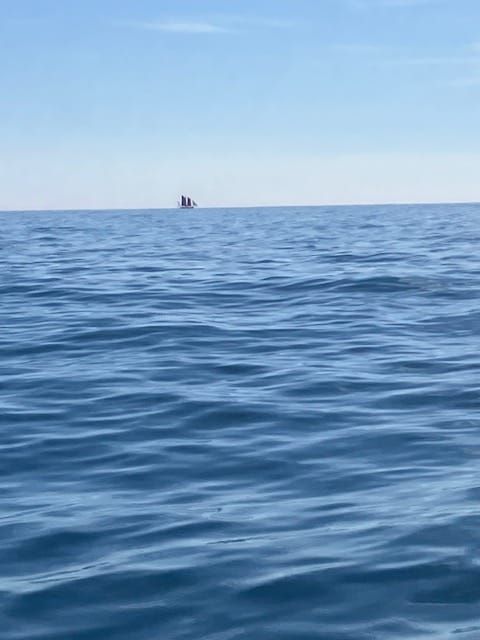
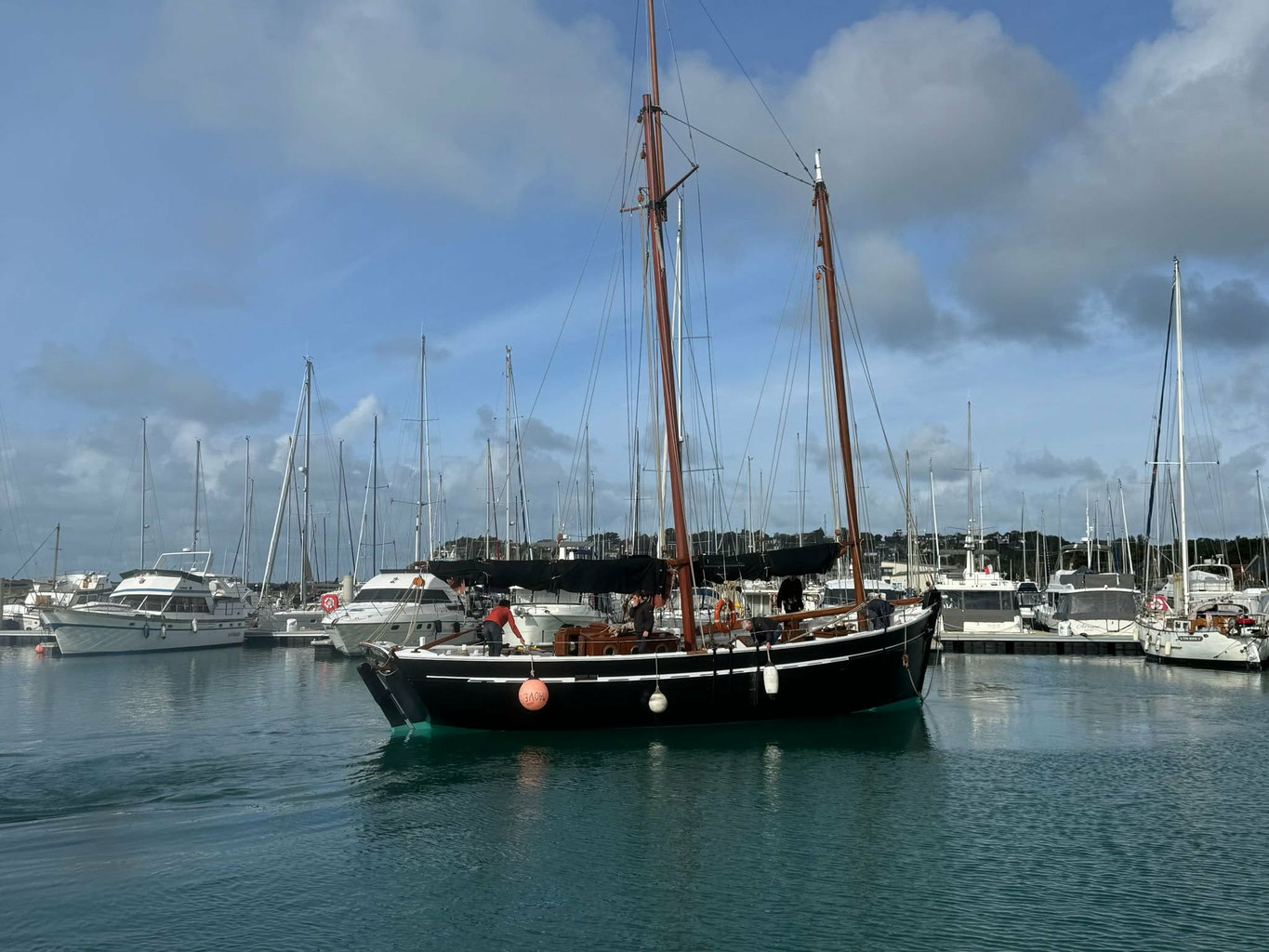
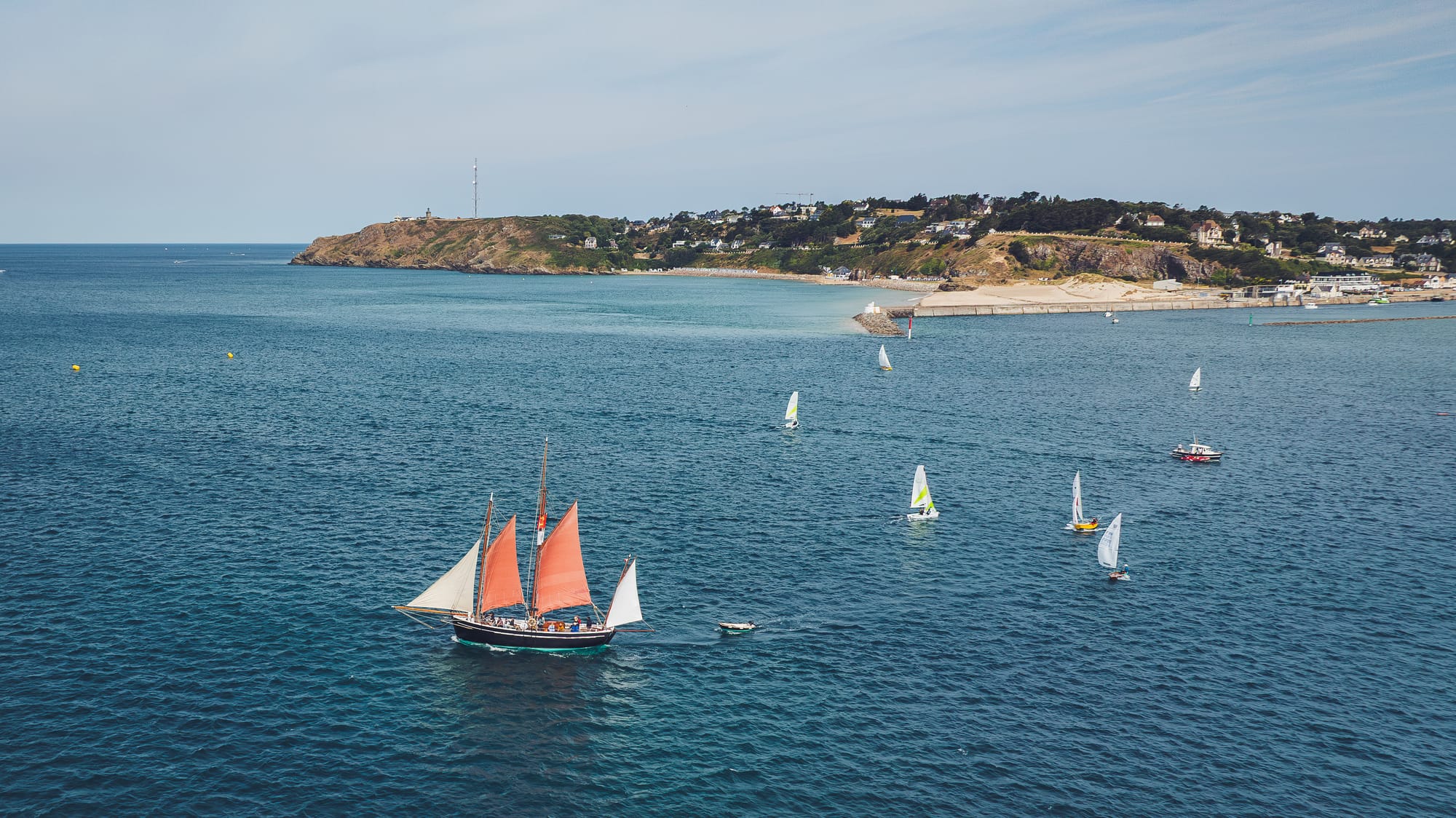
Her distinct red-orange-tanned, five-sail silhouette is a familiar sight along the Côte des Isles, that stretch of Normandy's Cotentin peninsula named for the islands. What's less known is that the Neire Mâove, Black Gull in the indigenous language of Normandy, is a redesign of the Lilian of Guernsey, a traditional anglo-norman schooner built in the mid 19th-century by Guernsey man Henri Bisson.
Redrawn by a renowned naval architect in Jersey, then constructed in public over two years in Carteret, Normandy, the Neire Mâove was officially launched in July 1992 and has been sailing across to the islands for more than 30 years.
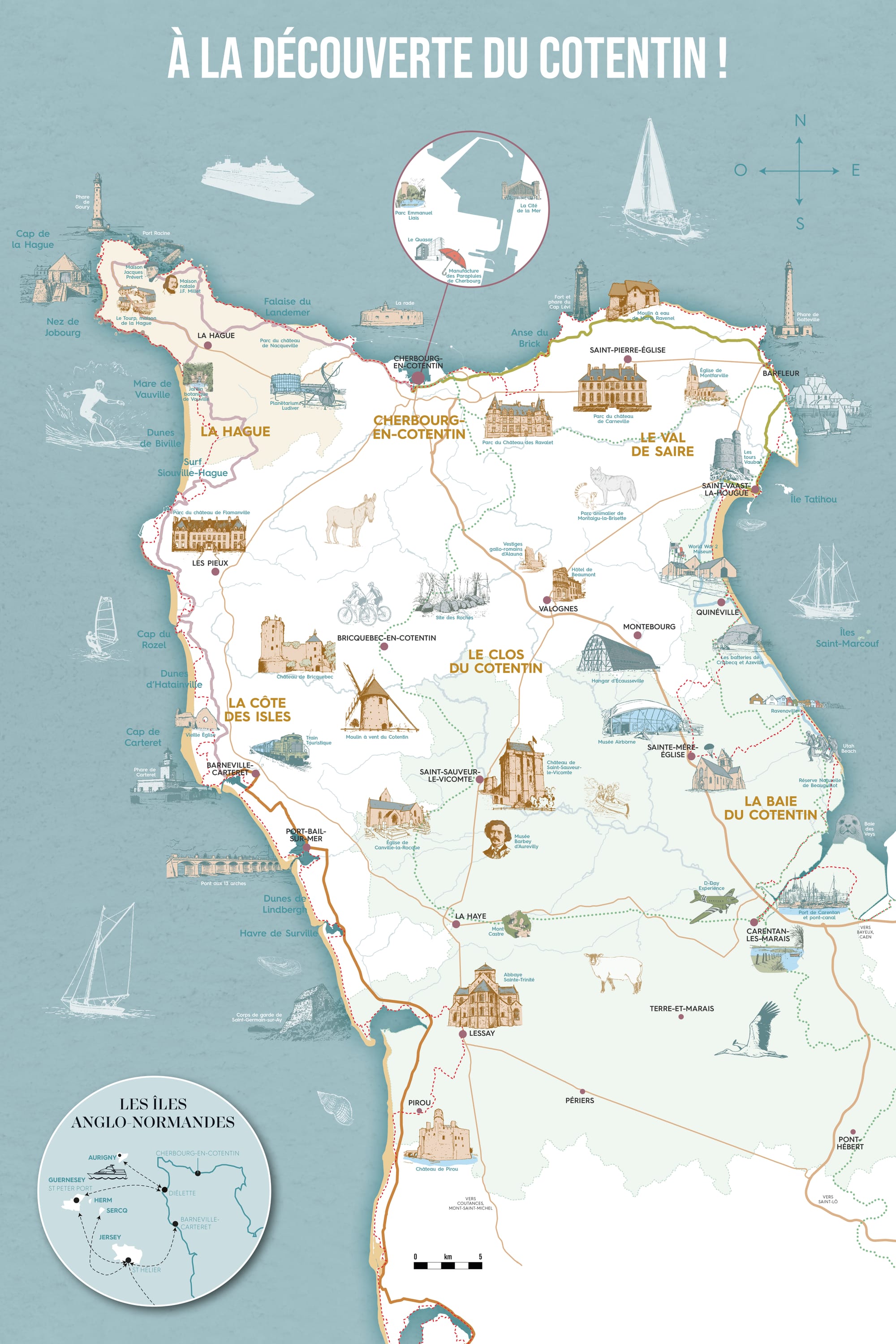
Côte des Isles, the coast of the islands.
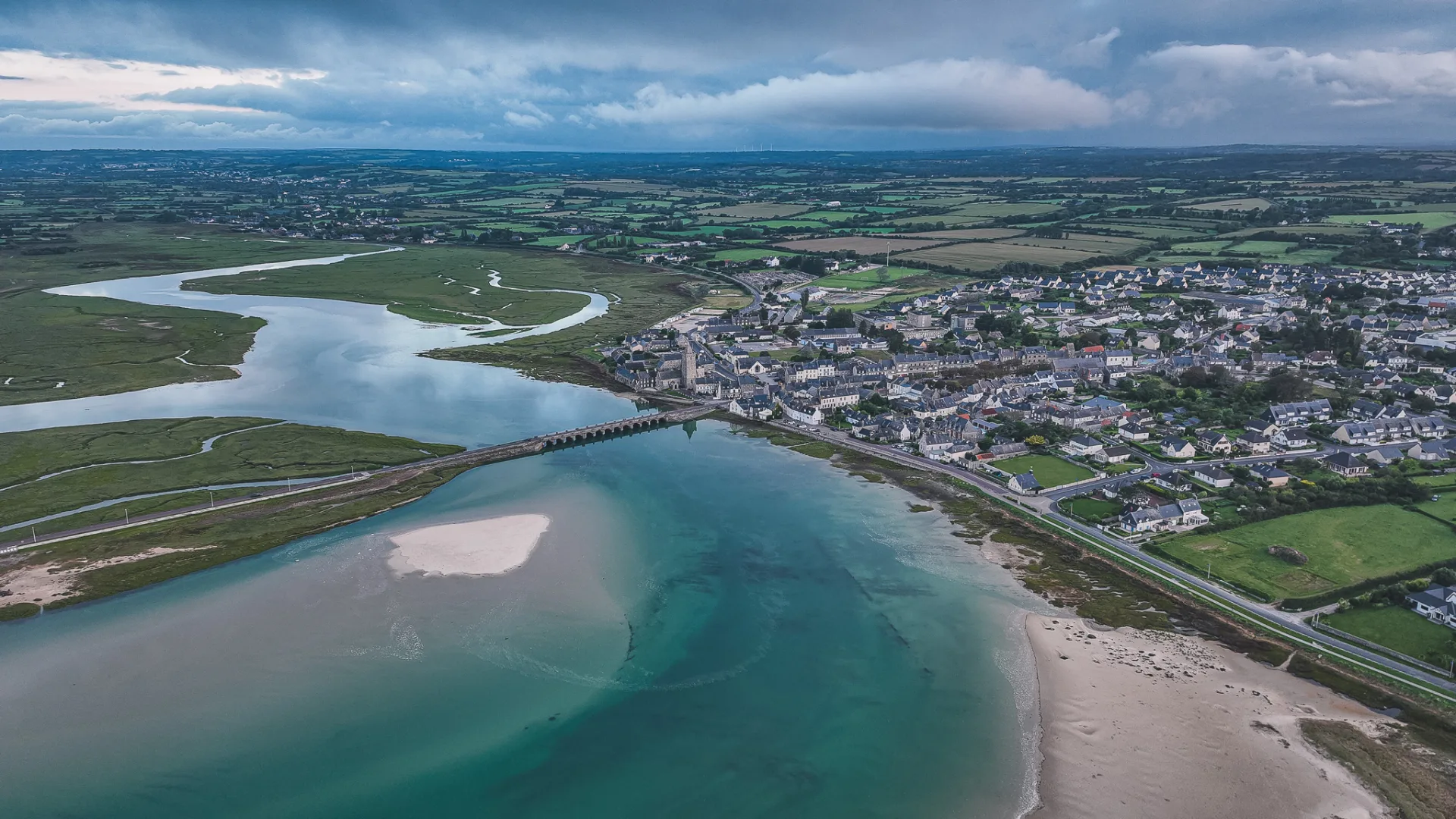
Home to the Neire Mâove, Barneville-Carteret, a fusion of Carteret and Barneville-sur-mer, is one of 14 villages and towns on the Côte des Isles, part of Normandy's Cotentin peninsula named for the Channel Islands visible on the horizon. From Baubigny, in the north, seas of sand dunes stretch over 20 miles down to Denneville in the south. Barneville-Carteret and Diélette are the ports of departure for the Manches îles seasonal ferry service connecting Normandy to the islands, alongside Granville, further down the coast.
As the captain of the Neire Mâove manoeuvres to approach the quay at Port-bail-sur-mer on the Côte des Isles, two of his passengers have made the considerable leap on to the jetty. With a crowd gathered in front of Le Repère, Bar des Pirates, they, and other willing hands, are pulling all 28 tonnes of the Neire Mâove in towards her moorings.
Could there be better symbolism for the relationship between the islands and the land: for the passengers who’ve leapt off the deck like they’re members of the crew, are experienced seafarers, founders of Guernsey’s Historic Wooden Boat Association.
Recently formed after the return of Edmund Morgan, a traditional wooden boatbuilder to Guernsey, the Association's mission to find and restore the island’s historic boats has brought them here aboard the Neire Mâove - a replica of the Lilian of Guernsey, a type of anglo-norman schooner built in the late 19th-Century whose production ceased around 1930.
On this 'convoyage' some 4 miles around the Côte des Isles to the Fête de la Mer in Port-bail, the port’s August maritime festival, the four Guerns have been raising the sails – and learning the lingo – 'tape-cul' for jigger sail - under the command of Captain Yann L'Anthoën and first mate Boris Hierro.
“The sun is setting over Vale, twinned with Carteret, the iron sail is chugging away, though we’ve got no wind,” said Morgan, describing the scene, the second time the Association has sailed, 19th-century style, on the Neire Mâove. "The Neire Mâove is an example of living, breathing history and community spirit" said fellow Association member James Piprell. Founded to keep the islands' maritime heritage alive, building a wooden sailboat, like this one, for islanders to experience traditional sailing is among their ambitions.
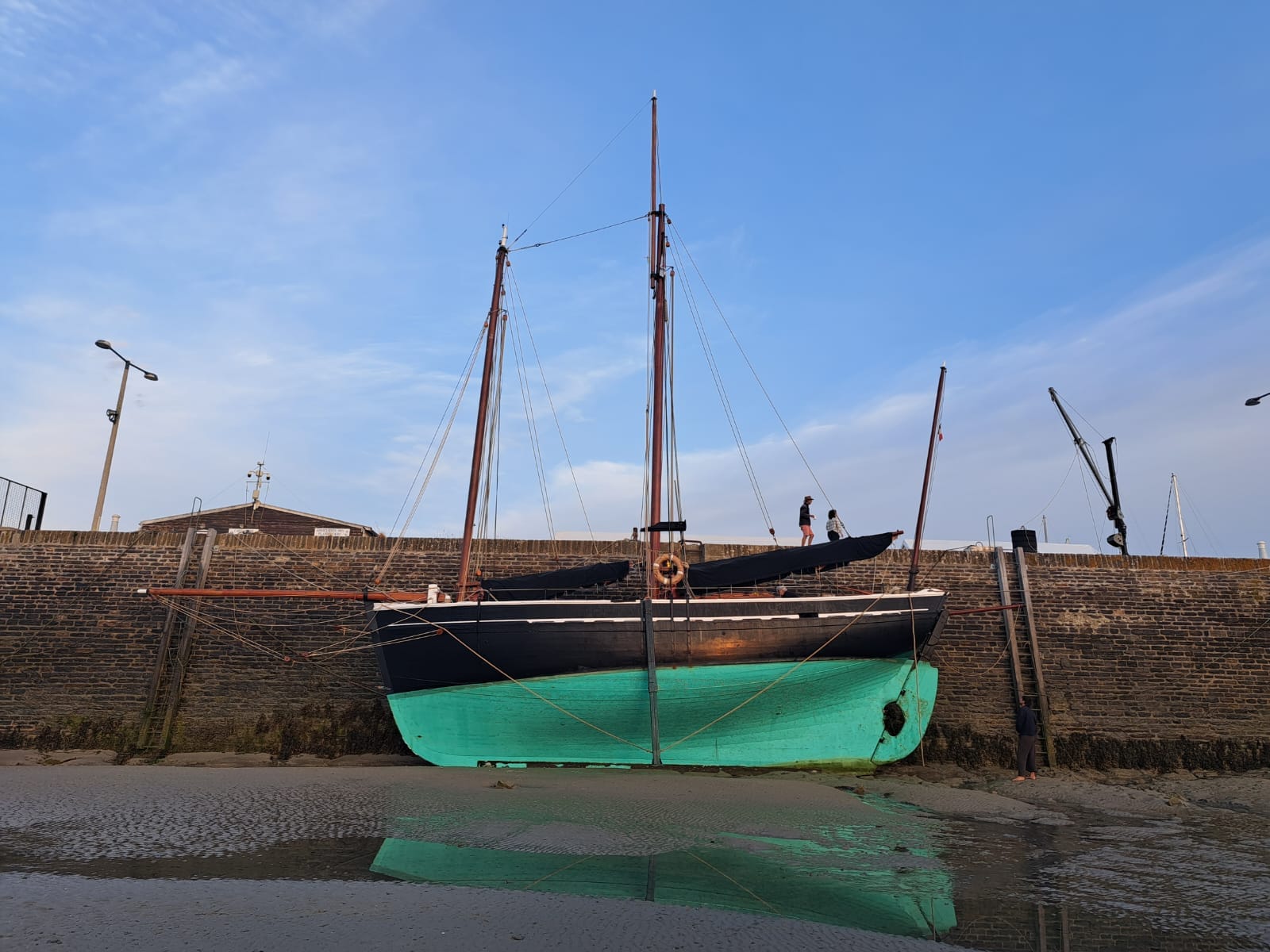
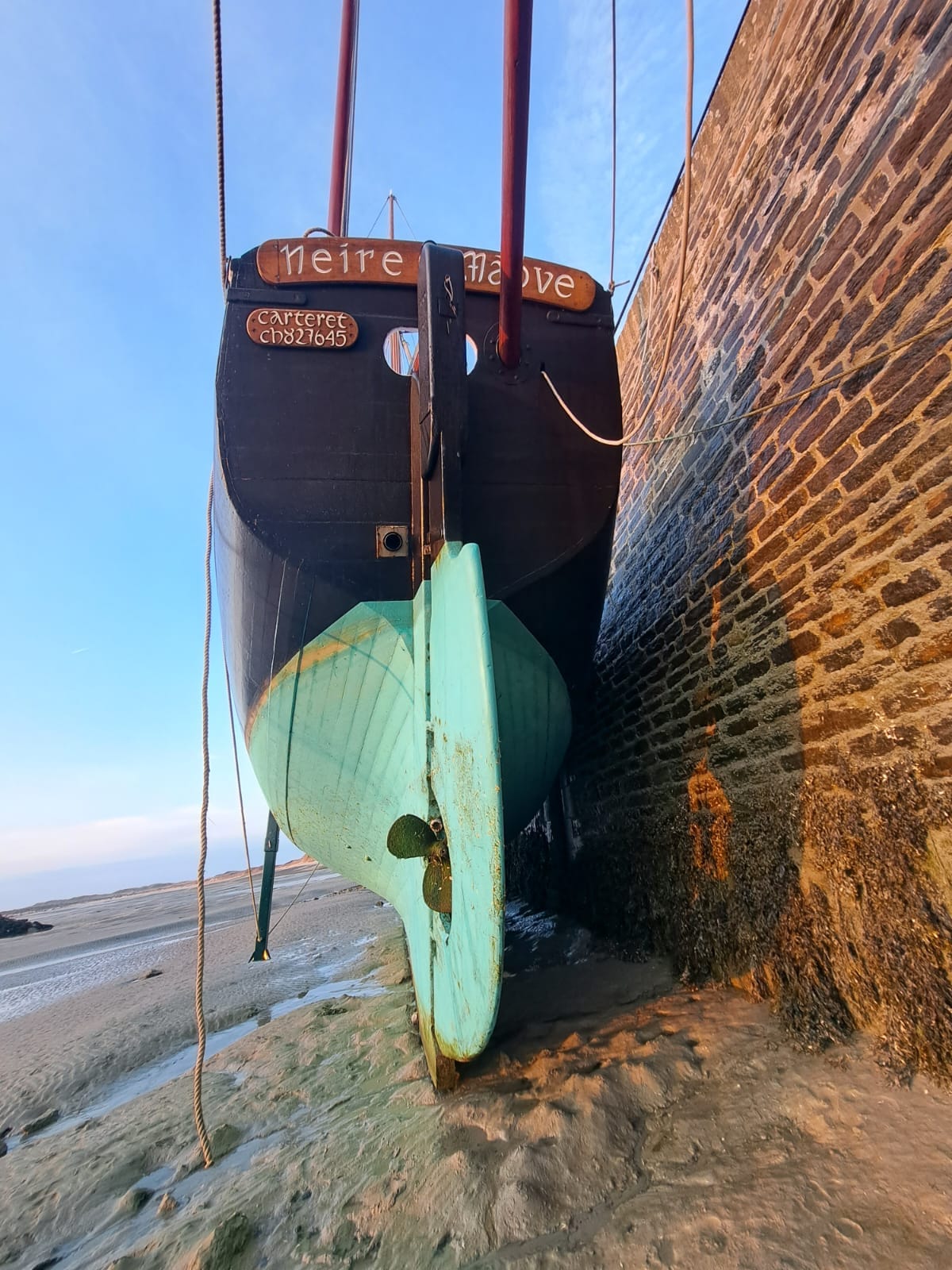
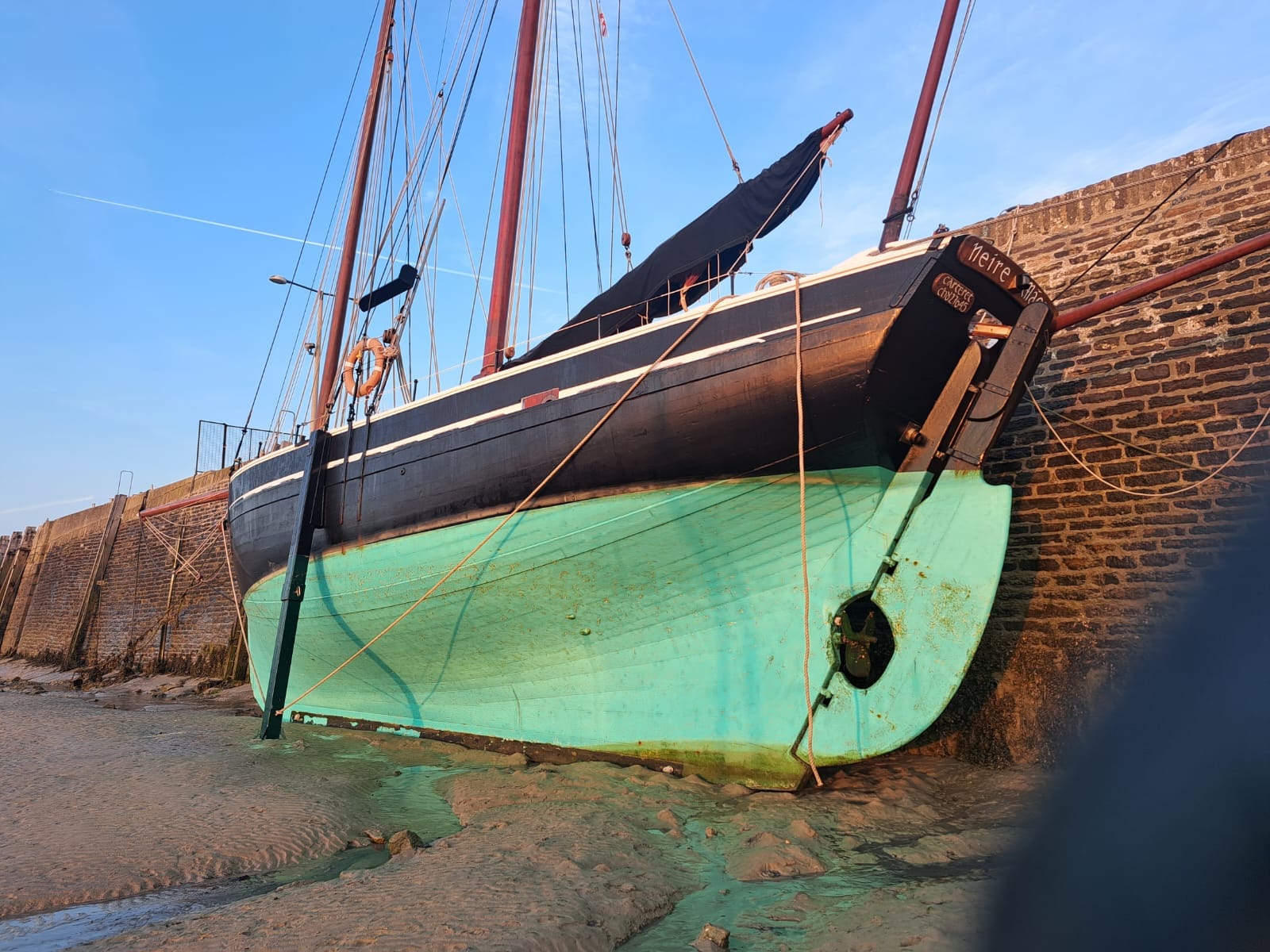
Neire Mâove in Portbail - 'un port d'échouage' tidal harbour
The Neire Mâove's arrival in Port-bail today is much-anticipated - it's the boat’s first visit to the challenging tidal port in two decades. She will spend the day hosting Apéro Bulot –glasses of Muscadet and sea snails - on the quay adjacent to the port's main festival. Setting up tables at daybreak, Port-bail's head of festivities, Manu Demet, proudly recounts how he will wear his Neire Mâove 'vareuse,' a fisherman's smock he bought when the boat first launched - "my wife and I had our wedding photos taken aboard, back in 1997."
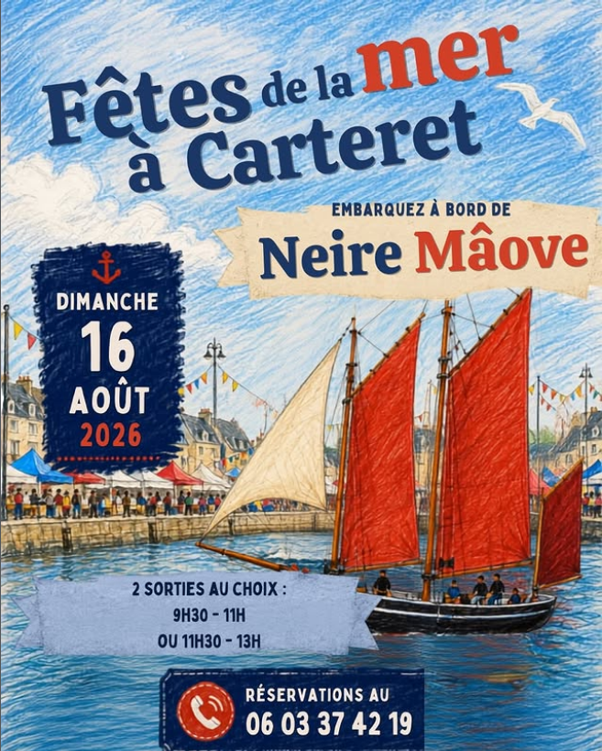
Sunday it’s back to Carteret, for the village’s own Fête de la Mer – during which trips on the Neire Mâove, the town’s unofficial mascot, today awarded cultural heritage status in France, are among the star attractions.
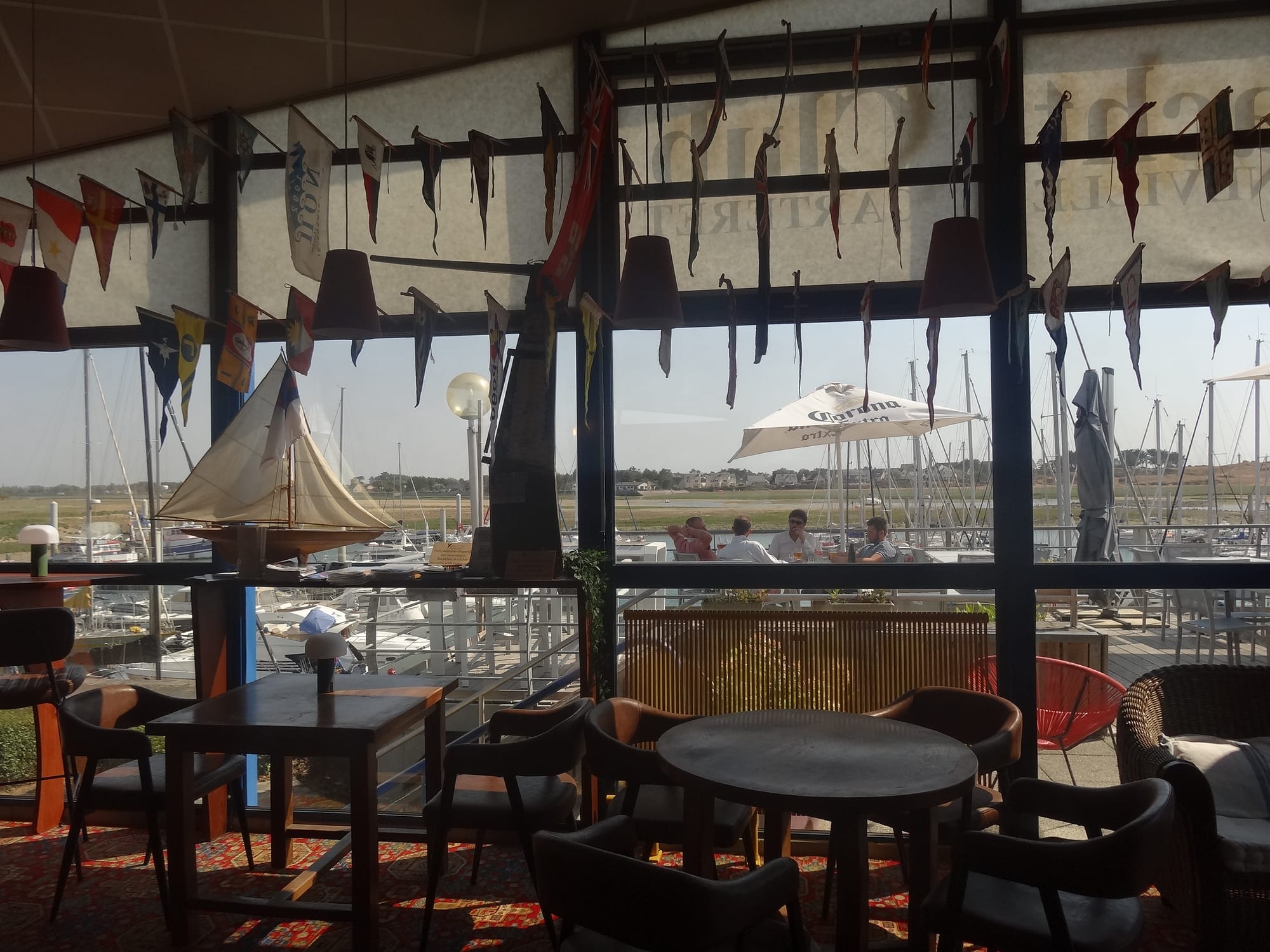
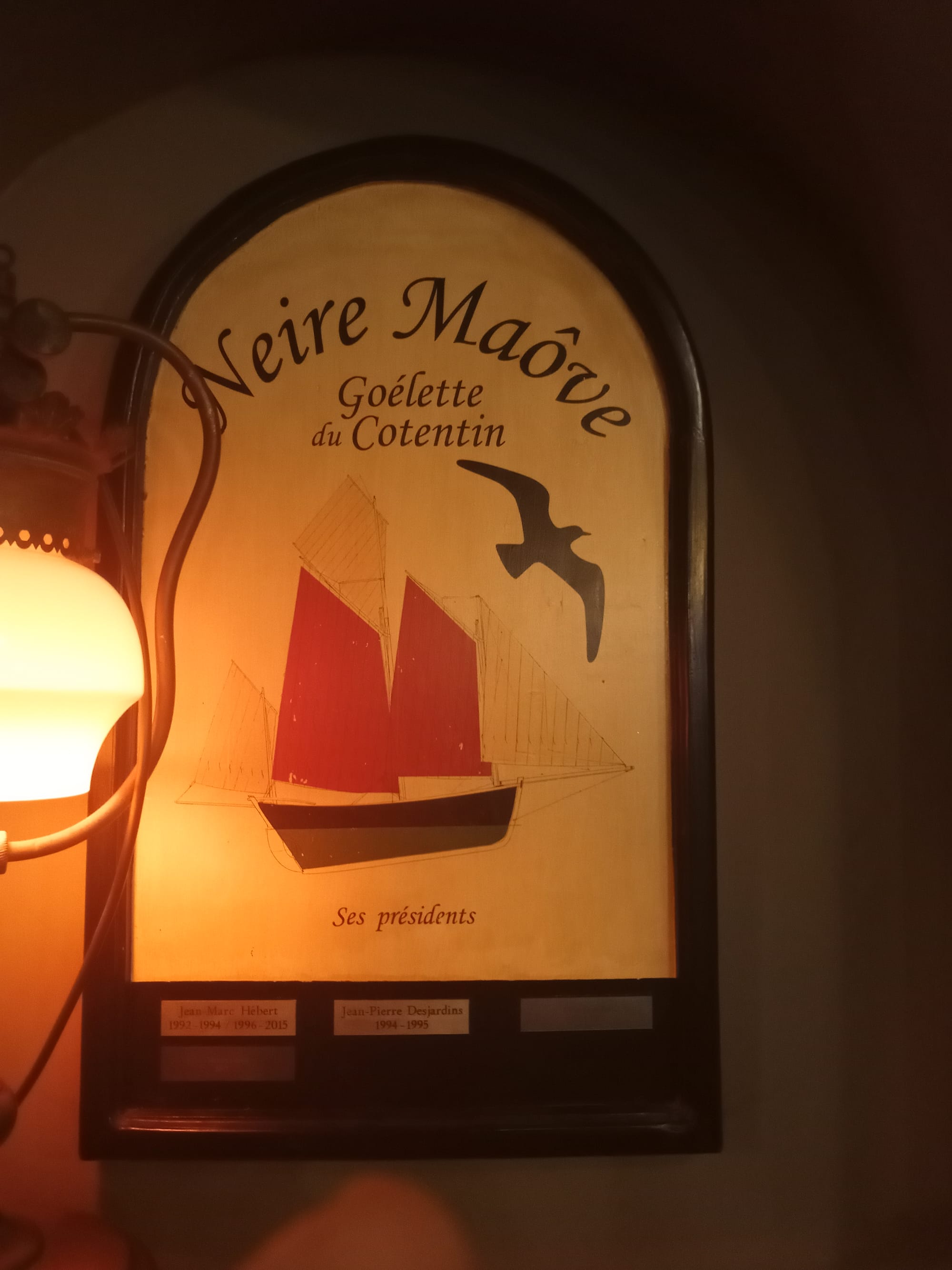
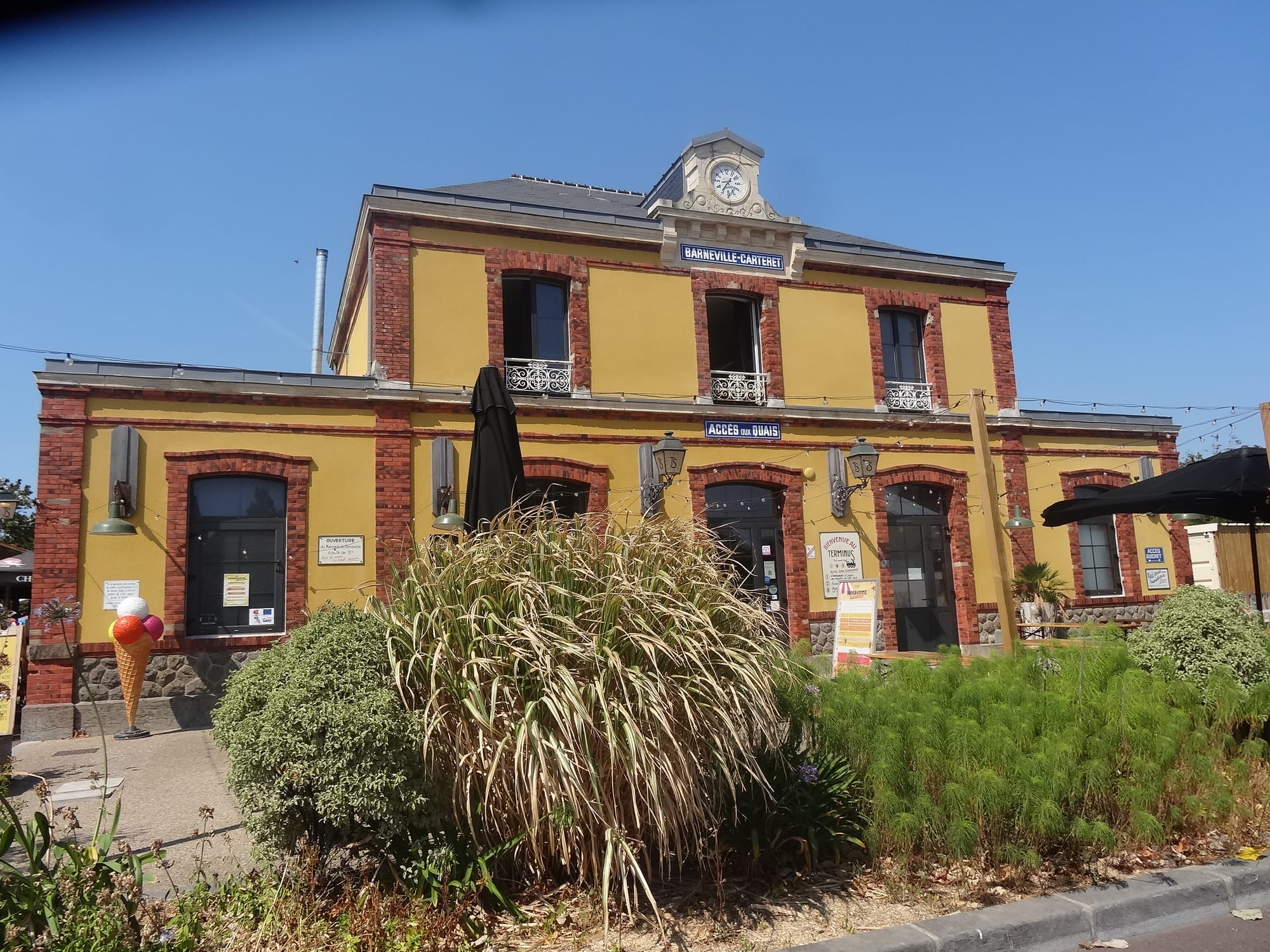
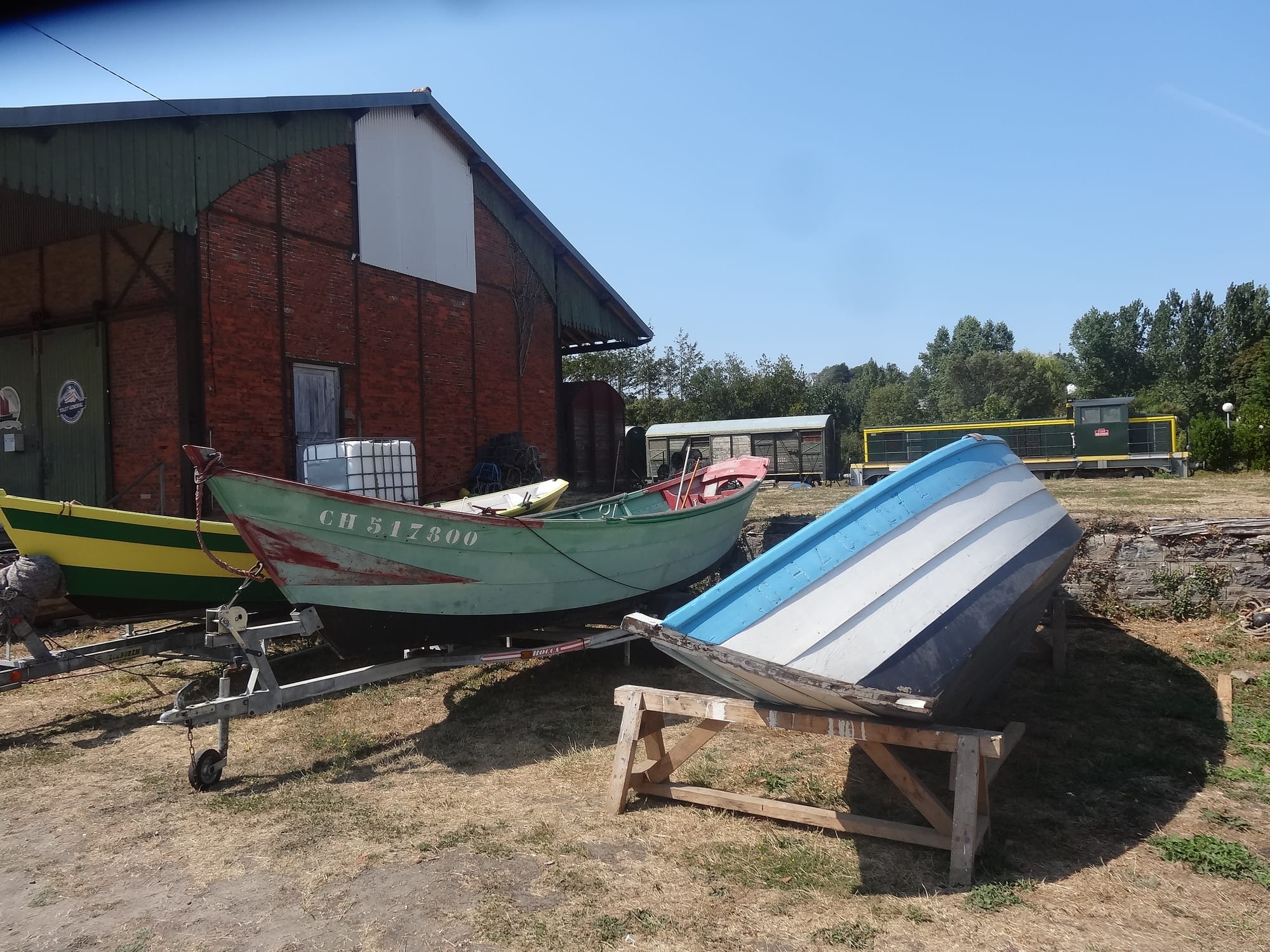
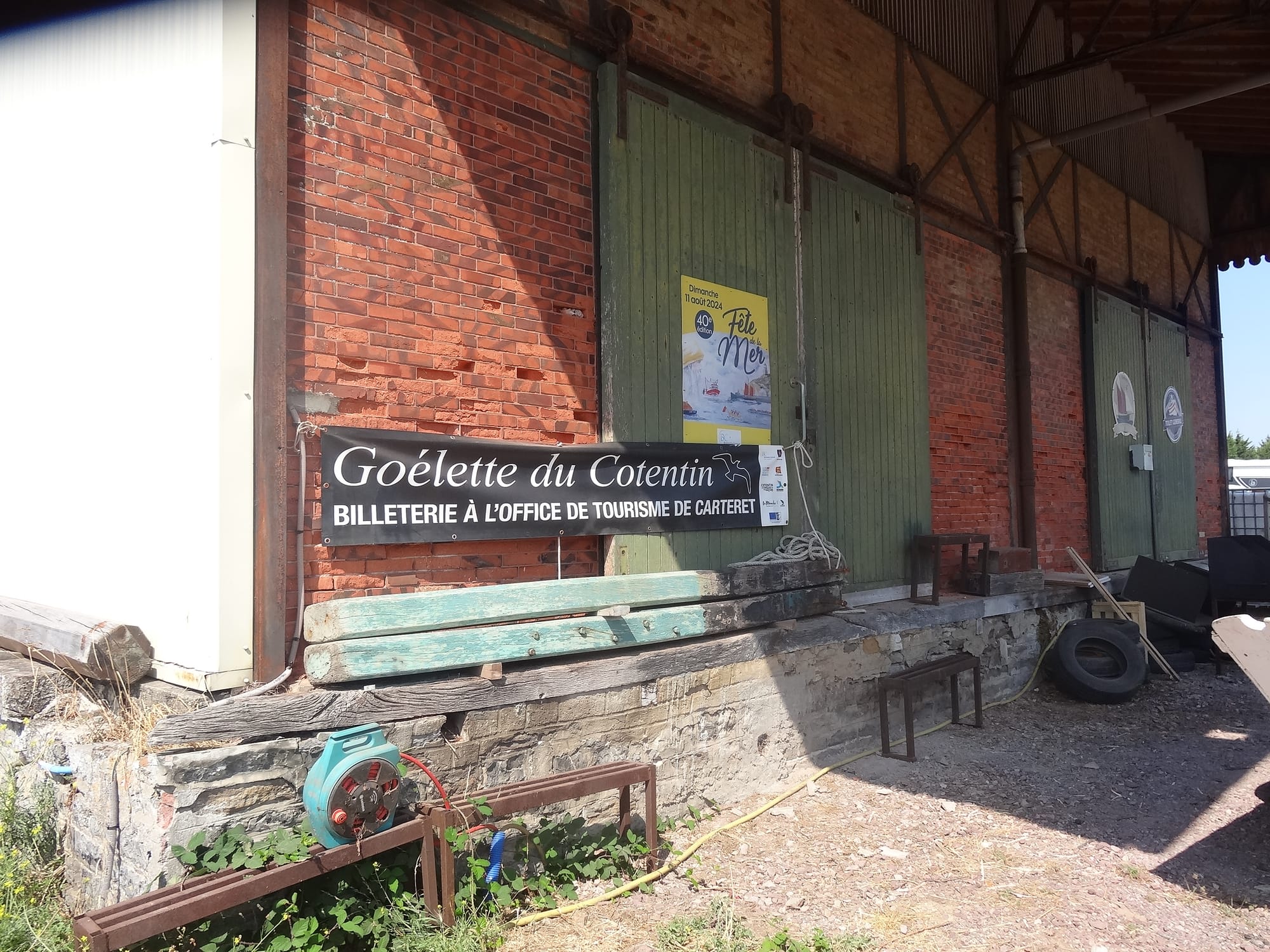
Neire Maove -'schooner of the Cotentin' - the mascot of Carteret. Carteret's former railway station is now a café, Le Terminus, and the neighbouring hangar, the Neire Mâove Assocation's headquarters
In the late 19th Century, schooners like the Neire Mâove would have dotted the horizon from the Côte des Isles. The type she was modelled on, Lilian of Guernsey operated as a working vessel; a ‘"vieux gréement" sailing from port to port, carrying goods between the islands, Carteret, Granville, and Cherbourg, sometimes fish, sometimes passengers, related Caroline Blanco, who joined the Neire Mâove Association eight years ago. “She has been rebuilt almost exactly the same as the Lilian of Guernsey. With two meters extra to better accommodate passengers."
In the era the Lilian sailed in and out of ports on the Cotentin, Carteret's railway station would have bustled with passengers on the “Paris-Carteret-St Helier” route. Since Carteret waved goodbye to its last Paris train half-a-century ago in 1976, today the former station is a café, Le Terminus, and the former railway hangar, the Neire Mâove Association’s official headquarters and workshop, leased for free by Carteret’s town hall. Teeming with willow baskets, dory boats, oars, masts and - the major clue that it’s a community hub for the Association - a beach-style corner bar.
Resident of Barneville-Carteret for almost 30 years, Caroline, whose grandfather, a Carteret man, would go to Guernsey to source willow for his crab baskets, relates how the Neire Mâove is at the beating heart of this coastal community. “In every school, children learned the song about the schooner."
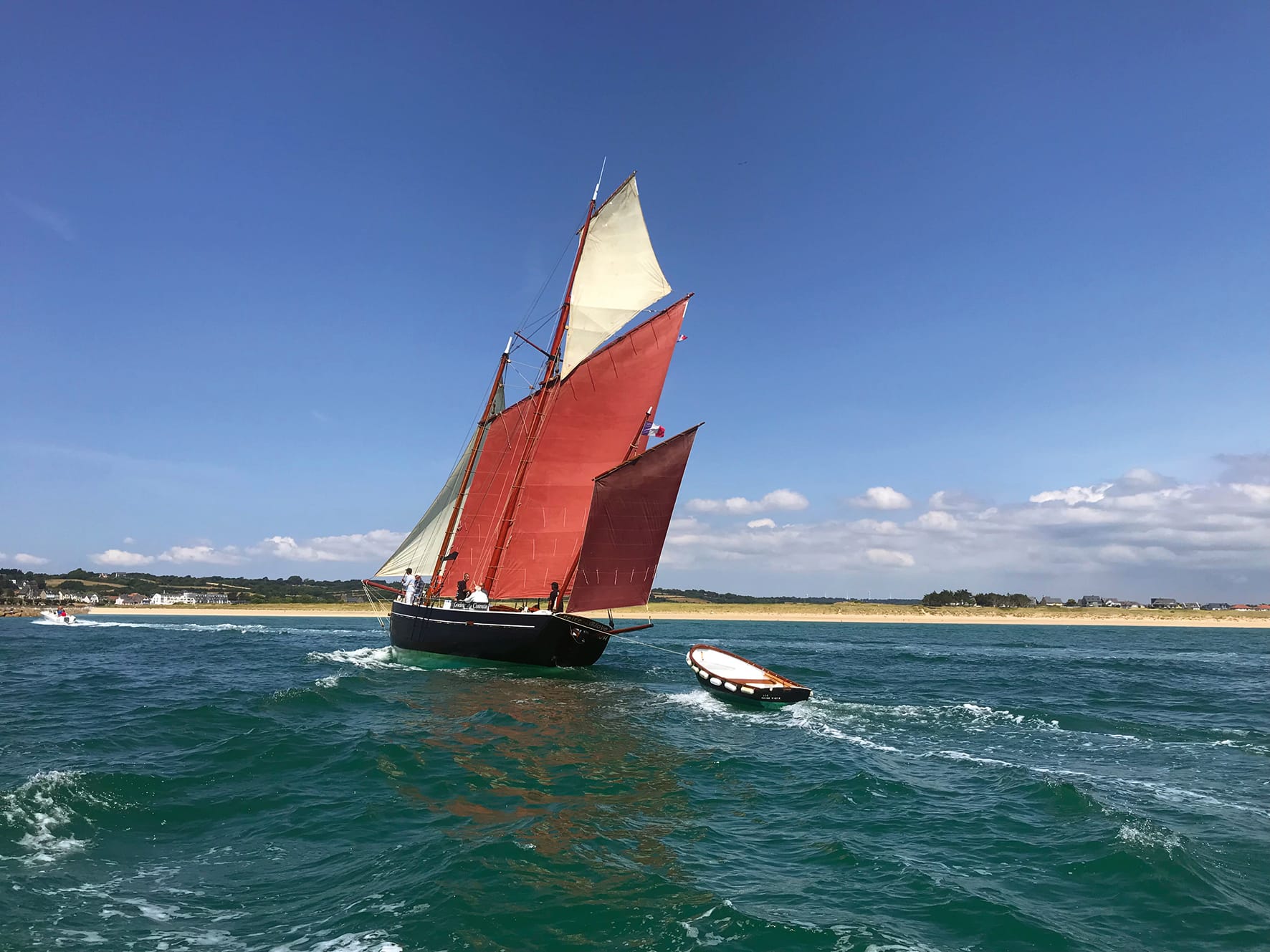
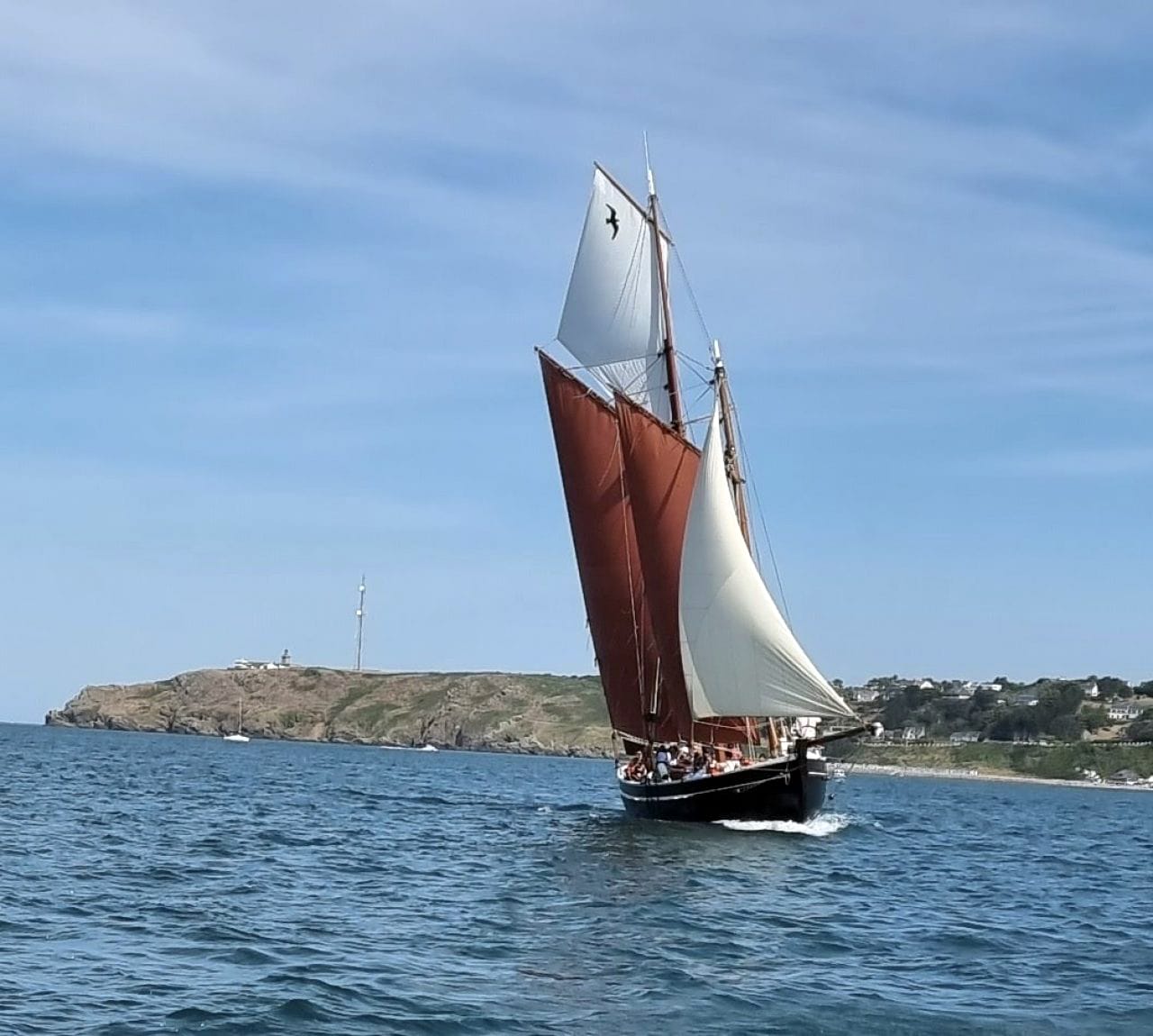
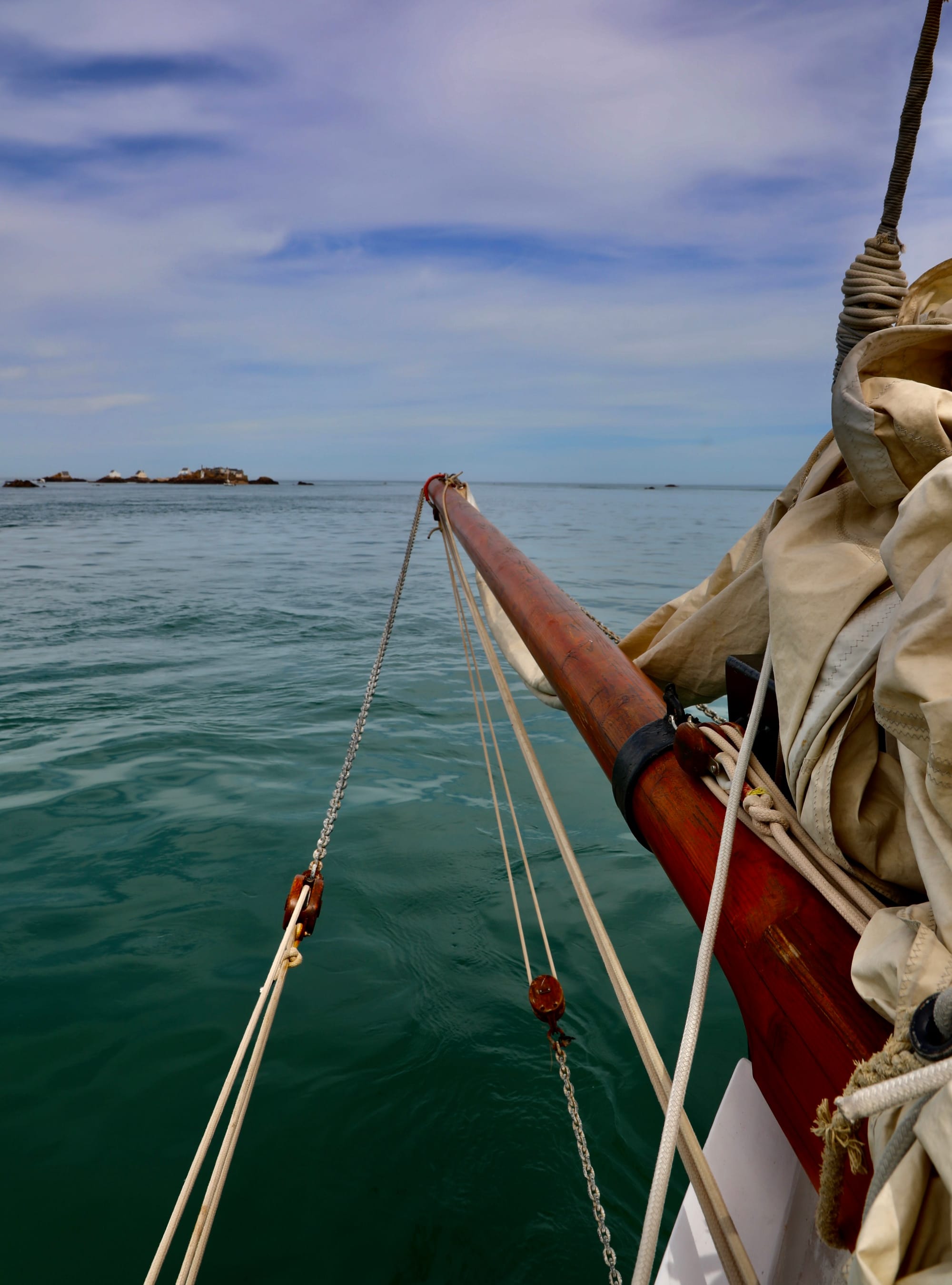
©Neire Mâove
A Cotentin schooner, lugger in the islands, bisquine in Granville, Today you are reborn, and it's in Carteret... the schooner song
Back in the day, in regattas, you’d pull out all the stops, And from Portbail to Sark, you’d cruise along at ten knots
When Lilian sank, off the coast of Guernsey,
No one mourned her, knowing she’d be back one day
Goélette du Cotentin, Lugger dans les îles, Bisquine à Granville, Aujourd'hui tu renais, et c'est à Carteret
Jadis dans les régates, tu sortais le grand jeu, Et de Portbail à Sercq, tu filais tes dix nœuds
Quand Lilian a coulé, au large de Guernesey, Personne ne l'a pleurée, sachant qu'elle reviendrait
The Neire Mâove's two-year build is a major chapter in Carteret's contemporary history. The quayside site was open to the public for people to pop by on their way to the beach. “Everyone still talks about it," said Théo Madelaine, newly vice-president of the Neire Mâove Association and sailing monitor at Carteret Sailing School. “People say to me – ‘I was eight – I still remember it.’
"We had thousands of visitors; it was free to just look around, and then we ran a boutique,” recalled Jean-Marc Hébert, former Carteret harbourmaster and the man at the origin of the Neire Mâove.
Sitting down with Jean-Marc over his whiskey at Carteret Yacht Club, is a glimpse into this stretch of the Normandy coast and its views of the islands past and present.
On this mid-August weekend at the port, where former Guernsey deputy Dave Fletcher, behind Carteret's 1989 twinning with the Vale, used to watercolour paint on the jetty, every other boat seems to be Jersey or Guernsey flagged. Hébert relates this summer's harbour talk, that the ETA is discouraging Carteret boaters from heading in the other direction, to "les anglos" as the islands are known. "I've heard people saying, 'it's 20 pounds, I could pay it but it really winds me up; we're off to Brittany instead.'"
"I've heard people saying, 'it's 20 pounds, I could pay it but it really winds me up; we're off to Brittany instead.'"
From exploring the Écréhous off Jersey, to multi-island long weekends in Guernsey, Sark and Herm or golfing excursions to Alderney, the Neire Mâove has been sailing visitors across to the islands in the epitome of slow travel, for years. This summer, with the new ETA requirement, and the need to restore the Association's financial stability, the boat didn't sail any further than the Écréhous. The Neire Mâove Association's new president, Daniel Avoine, with Caroline in charge of the schedule, prioritised filling trips on the Côte des Isles instead.
Hébert sees the new ETA as the latest sign of the islands' anglicisation. "With Brexit, Great Britain decided to leave Europe – okay. But why is it that now, in the Channel Islands – which had never been part of the EU, the Schengen Area or anything of the sort – why are they just going along with it and doing as the English do? I don’t get it.
These wonderful Channel Islands. They’ve been taken over; ever since the end of the last war. They’ve become anglicised. Everyone speaks English now. When I was young, when you spoke to islanders, they’d either speak French or Jèrriais or Guernésiais." Now he said, "the islands are completely losing their original culture to the English."
"When I was young, when you spoke to islanders, they’d either speak French or Jèrriais or Guernésiais."
Hébert may be the only man in Normandy who can claim to know one particular aspect of the islands’ original culture, traditional wooden boatbuilding, better than most islanders themselves.
In the early 90s, when Le Chasse-Marée, a French maritime magazine, launched a competition on the basis that every port in France had its own specific type of historical boat, Hébert, then a teacher, jumped at the chance. “I’d already been thinking about traditional boats; but that was the catalyst."
The hunt for a boat local to Carteret began. Combing through vintage postcards and old photos of regattas, eventually images of neighbouring Port-bail unearthed a distinct type of schooner. Finding out that two had been built in Guernsey, Hébert set off for the island. He delved into the archives at Guernsey’s Priaulx library, then under director Hugh Lenfesty, and talked to people in the boating world, discovering traditional boats in other islands; the ‘Hirondelle’ in Alderney, and the 1890 ‘Vigilo’ in Sark.
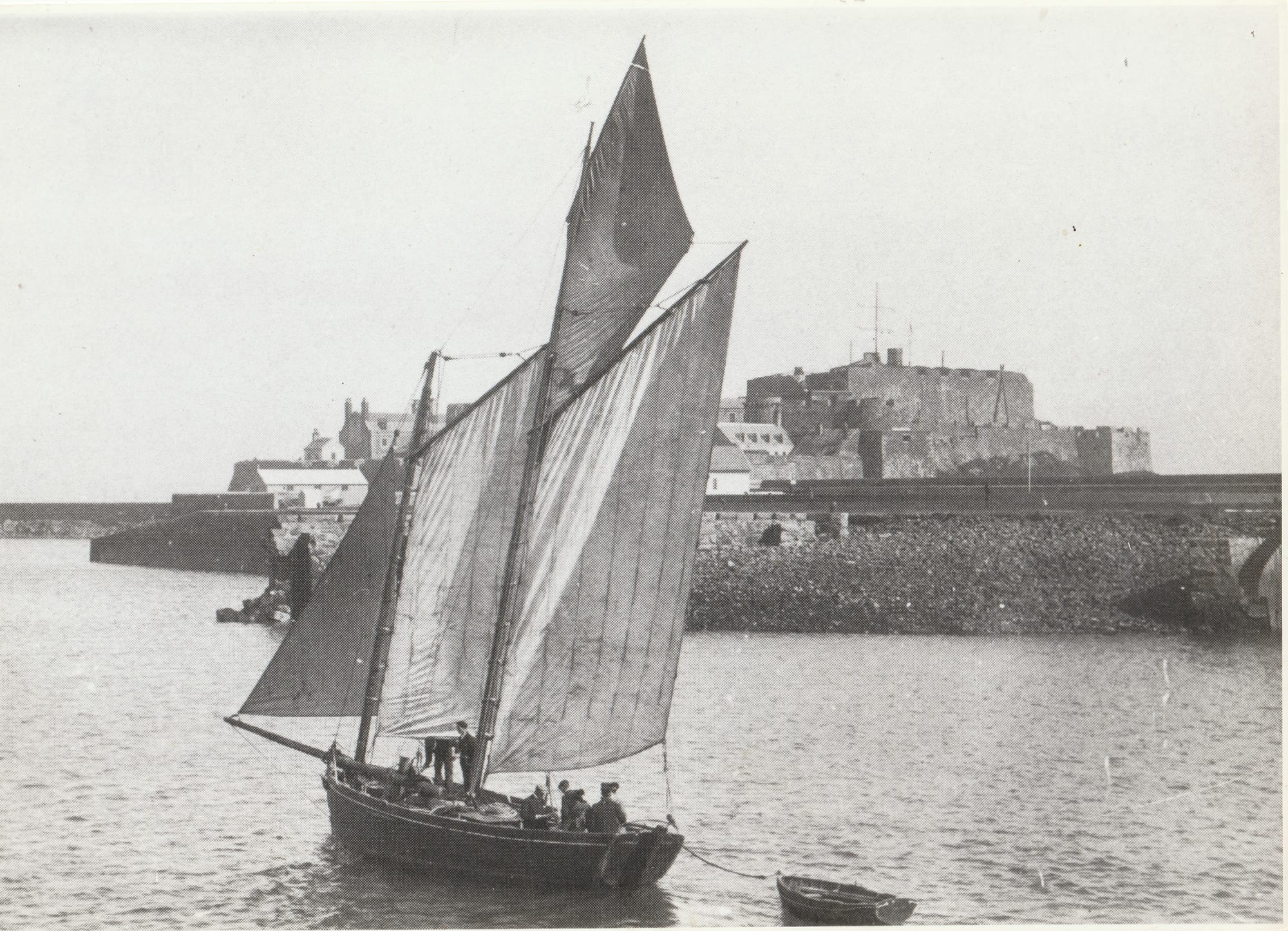
Once Hébert decided on the Lilian, the late Alain Buchanan, a renowned naval architect – then living in Jersey, drew up the plans for the sum of 3,000 pounds. The shipwright – Pierre Legueltel, from near Coutainville further down the coast, agreed to move his entire workshop to Carteret. The town hall gave the Association the land for construction for free.
The build required 2.1 million francs – around 300,000 euros today. A third of the money was crowd-funded from the public, a third from corporate sponsors and a third from government, from the town hall, the wider administrative area called the département - La Manche and the Normandy region itself. Among early corporate supporters was the Flamanville nuclear plant: “I was not proud of myself, but they gave us 150,000 francs." A funding request to Jersey's government, meanwhile, was turned down.
Three decades later, Hébert's research would become a book, 'Goélétte anglo-normandes' - Anglo-norman Schooners, retracing the islands' traditional boatbuilding heritage, while he bought the 'Vigilo,' a three-masted vessel to sail himself. Thought to be the only Guernsey boat of its era still sailing, the Guernsey Historic Wooden Boat Association is keen to see her return to the island's shores.
For Hébert it's a "delight" to see "these kind of people waking up." When tracking down wooden boats across the Channel Islands in the early 90s, "there wasn’t much interest, except for a few people."
Bringing the islands to the small village communities of this coast - some 2200 people live in Barneville Carteret - the Neire Mâove tells a little-known chapter of Guernsey and Jersey's history. "I arrived in Carteret a year-and-half ago from the Calvados département. The image I had of the islands was all yachts and tax havens, I had no idea of the history," said vice-president Théo Madelaine. New volunteer Cécile Demeaux, on her first trip aboard the Neire Mâove, likewise knew nothing of the islands' boatbuilding heritage. “I didn't know how much boat construction was specific to the anglos, or that there were differences in construction depending on the region."
In a cost of living crisis when more French people are living in poverty than in 30 years, the Neire Mâove Association keeps membership charge low for its 150 members, at 30 euros a year, or 15 euros for under 30s; opening up sailing to a community who might not otherwise have had the opportunity. Caroline Blanco had never been on a sailing boat in her life. “I’m from Seine-Saint-Denis, the Paris suburbs – in my mind, sailing wasn’t for me, it never entered my head. To me, boats were just for rich people. As soon as I had the chance, I fell in love.”
"It's really theirs, the population here," nodded Hébert. “Everyone is behind us. If the boat ever had to leave, there would be a riot."
Coming soon: Aboard the Neire Mâove - the podcast
An îles - Neire Mâove media partnership: Workers of the sea | the podcast.
Carteret in climate breakdown: "There's a slither of the river left." Read more
The French state authority, La Préfecture de la Manche, placed the entire Manche départment on a level of 'drought vigilance' at the end of June. It then raised certain places to the next level - 'drought alert' on 7th July. "It's worrying. We haven't had rain for two-and-half-months" said Hébert, in mid-August. "The small river next to the port is almost dry, there's still a slither of water. I last saw it like that in '76. You can see the leaves yellowing on trees, as if the tree itself is dying." At the sailing club, "we've had restrictions on water use since June," added Madelaine.
Visitors avoiding areas hit by fires descended en masse on Normandy instead Madelaine said. "This summer, with the massive wildfires near Bordeaux, lots of people have abandoned their holidays in Cap Ferret – and turned to the Cotentin instead – at the sailing school, you hear people saying, ‘We’re not going down south any more, it’s too hot."