VEF 50: "We didn't even think about toilets!" volunteers at the earliest festivals look back.
Part II: Stories from original collective members continued.
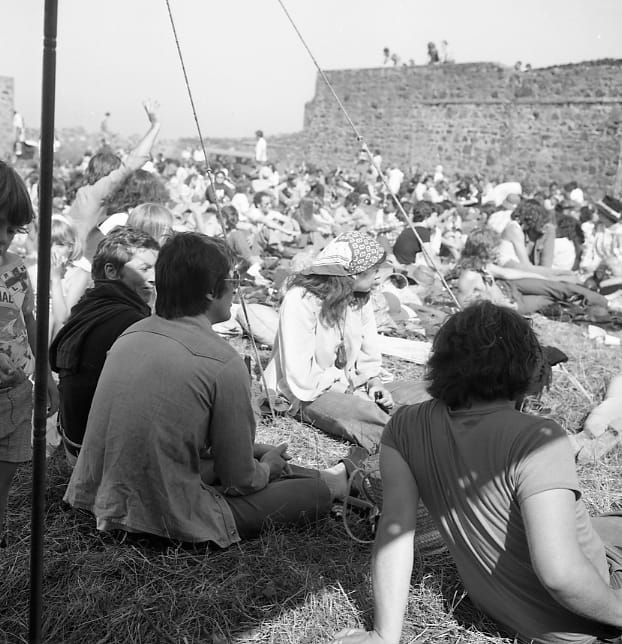
"It was something quite strange for Guernsey, back then, maybe viewed with some suspicion." Alan Edwards, collective member
In the festival's early years, Alan Edwards was working as a painter & decorator and living as the night caretaker at Victor Hugo's Hauteville House, when Errol Groves ran his shop Oasis at the bottom of Hauteville. Alan invited friends to hang out in Victor Hugo's garden and do some gardening, when the house itself was closed to visitors on Sundays.
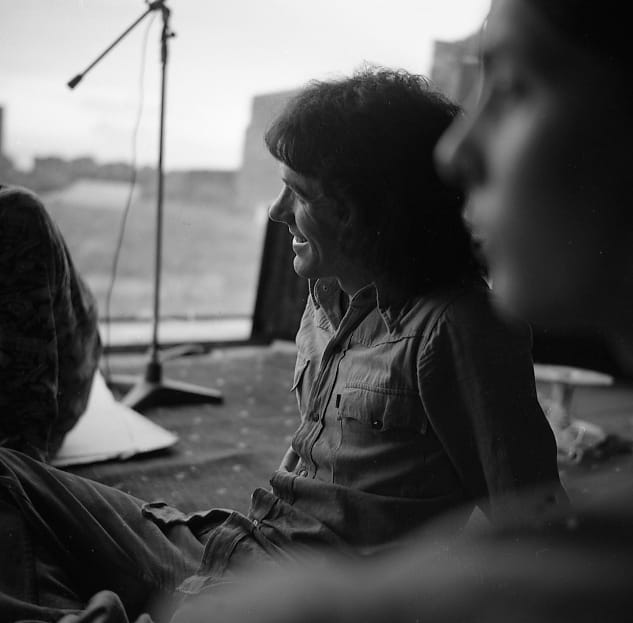
We were very much the counter-culture of the mid 70s, my later career was no reflection of how things started out! I was very much part of a hippie generation, a passionate vegetarian, we had a relaxed, alcohol-based social life. I had shoulder length hair, as did Mike, we were good friends, with a regular social group. In some ways, Vale Earth Fair was Guernsey’s equivalent to what Woodstock would have been, and that countercultural group promoted of course, by Errol, in the days of his shop Oasis at the bottom of Hauteville, which was a meeting place for everyone involved.
In some ways, Vale Earth Fair was Guernsey’s equivalent to what Woodstock would have been
I was living at Victor Hugo’s house at that time. Back in those days, Roger Martin was the curator, a friend had been living there and was moving on from the island. I was looking to get away from home so he said ‘how do you feel about living at Hauteville House, they need somebody to be there at nighttime?' Not as a night manager, just as a caretaker. So I moved in.
Oasis was literally down the road, my local was the Helmsman so I’d meet Errol, Adek de Kooker, Mike, John Walden, a group of us in there on a regular basis. Meetings would take place also in Caves de Bordeaux, the Helmsman and various drinking places we gravitated towards, with people who performed.
I was looking to get away from home so he said; ‘how do you feel about living at Hauteville House?
Putting up the stage wouldn’t have passed health and safety by any stretch of the imagination! It was this framework perched atop of 40 gallon drums. One of the most precarious parts of the whole structure, I can still visualise it, was these two long scaffolding polls criss-crossing over which electric cable ran over the top down the cliff to the yard at the bottom. We didn’t have money for generators. On more than one occasion in the early years the fuse would blow, all the lighting went, everything went off. It was a case of getting in touch for someone to come and change the fuse to get up and running again, so you’d have interludes where nothing much was happening, just waiting for the power to come back.
Everybody was very much absorbed in the day, I didn’t notice time passing, we were just part of it.
A wing and a prayer and a lot of hard work went into it. For all of us, we’d do whatever was necessary, making sure there was nothing untoward or going wrong in the arena, seeing people in. Everybody was very much absorbed in the day, I didn’t notice time passing, we were just part of it.
It was very much a question of would it survive one year, two years, a third year? 50 years on, that’s quite astonishing.
I’m not sure you could call us like-minded people but we all had a great warmth towards one another. Probably the first year, it was something quite strange for Guernsey, back then maybe viewed with some suspicion, but of course it's stood the test of time. It was very much a question of would it survive one year, two years, a third year? 50 years on, that’s quite astonishing.
Alan Edwards stayed involved for four or five festivals and later moved to Switzerland as part of his 38-year career in banking. Now retired, he lives in Guernsey.
The first year we didn’t even think about toilets, somehow people managed to survive! Peter Roffey, organising collective & maker of the Fair's infamous vegetarian bean jar
Peter Roffey, who grew up near Bordeaux, got involved in the first Earth Fair the summer after he left school, at 18. He had first met Errol as his brother Tom Roffey was married to Trudie, sister to Carolyn, who was married to Errol.
I’d just left school and was picking tomatoes out near Vazon. Mike Coughlin was picking and they needed an extra picker. So we picked tomatoes from about half five in the morning, finished at lunchtime. Errol was just round the corner, so we’d go down and start doing the planning at the top of L’Erée beach. Though there wasn’t much planning to be honest! We’d done concerts at Little Theatre, various places, then we decided we’d do the castle.
You could go up to the dam and see the old farm buildings in the valley from before it was flooded.
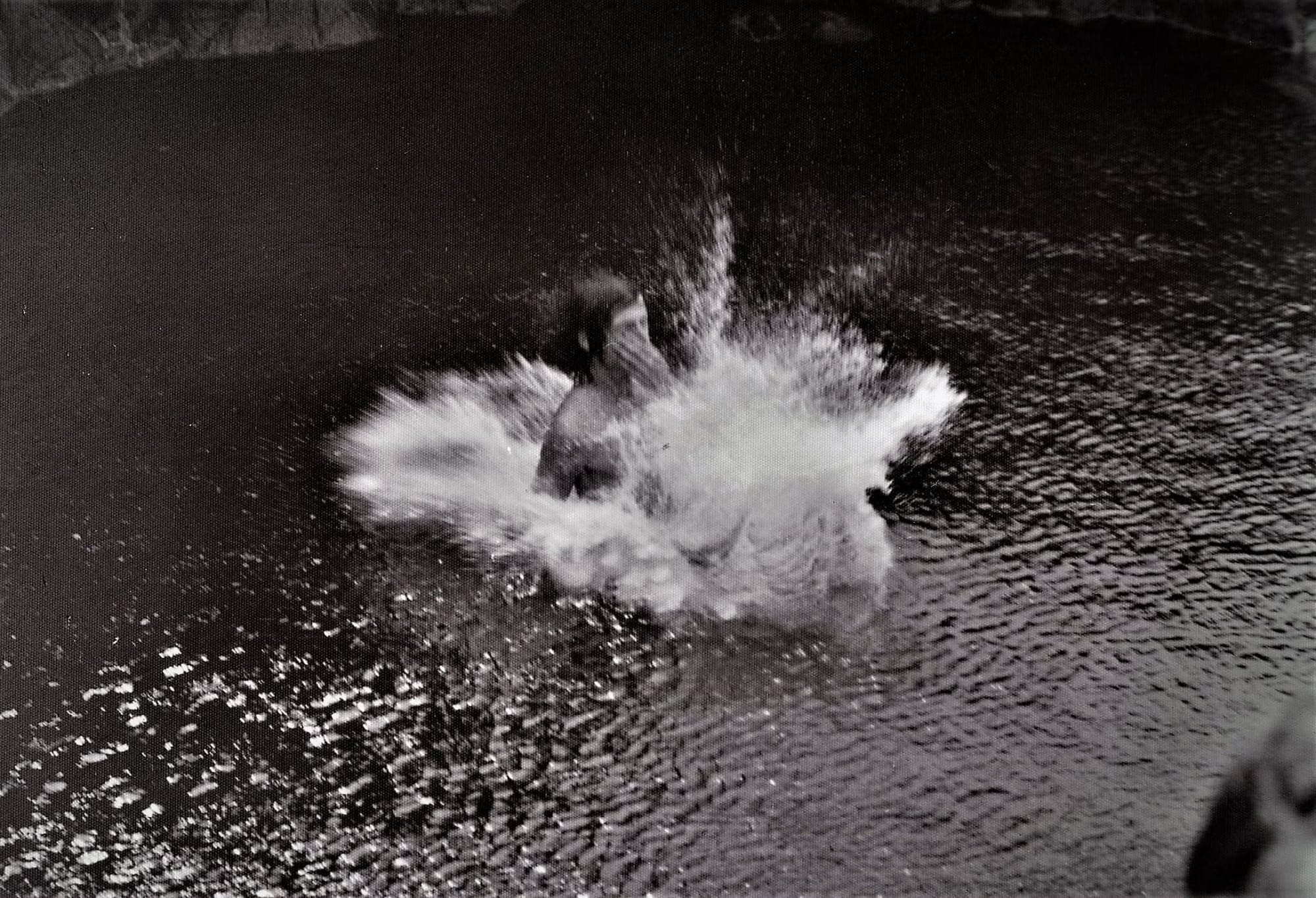
There was real water rationing that summer, we were urged not to take baths, or only have a few inches, to save the washing up water for the vegetables. You could go up to the dam and see the old farm buildings in the valley from before it was flooded.
The castle was in a complete mess, we spent days shifting granite around from where people were going to be sitting and watching, because it was just swoon with stone.
So the inside of the castle was very dry and yellow. In those days people used to go up with their cars to spin around and go out again, there was no real control, which destroyed the surface.
The castle was in a complete mess, we spent days shifting granite around from where people were going to be sitting and watching, because it was just swoon with stone. I don’t know why it was in that state. There used to be buildings in there up until end of the occupation, people living in them, whether it was the remains of those. We had chain gangs moving out stone to the edges so that we could make a big space in the middle.
I remember we got to the start time, not many people were there, an hour later it was good. Because it was free people came and went. The music was all local, in the afternoon all folk, then one or two rock bands in the evenings.
The first year we didn’t even think about toilets, somehow people managed to survive! We didn’t have security, we didn’t sell any booze, we didn't have a licence, people just brought their own in in those days.
The first year we didn’t even think about toilets, somehow people managed to survive! We didn’t have security, we didn’t sell any booze, we didn't have a licence, people just brought their own in in those days.
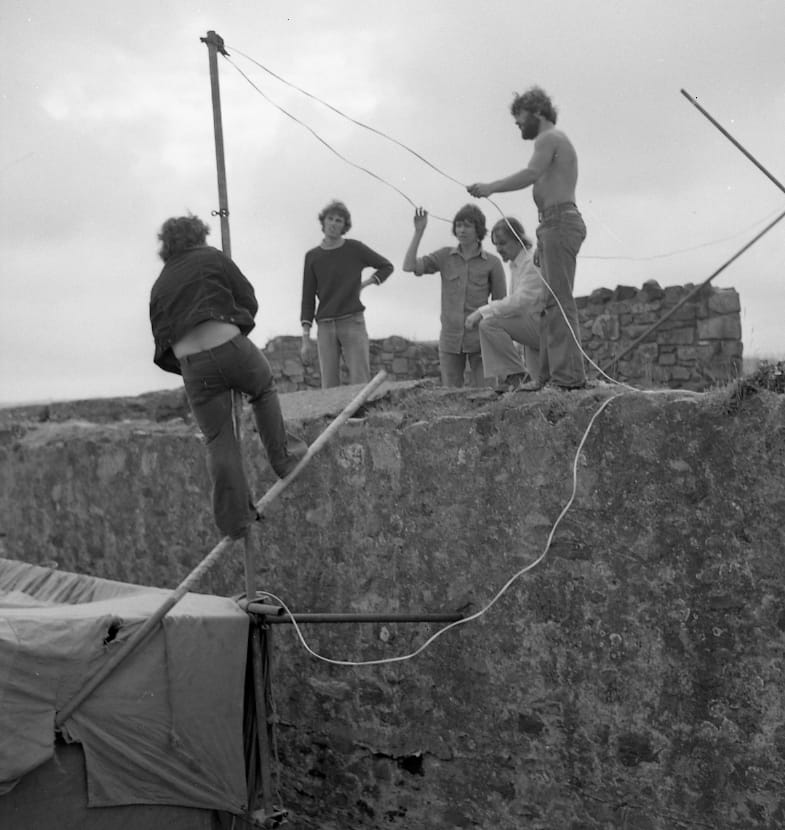
The closest we got to sponsorship that first year was we got these tarpaulins for the stage from Jack Norman who set up Norman Piette and Norman Commodore. We just decided to go and ask and they referred us to the boss, and he asked ‘is it for charity,’ and we said ‘yes’ so they helped out. He lent us an articulated lorry for the day to go round picking everything we needed up from around the island, not in return for anything.
We put donation boxes, made a healthy profit to give to charity, for the local branch of the Mother Theresa charity Jeanne Gathercole ran, despite not charging to get in.
We always made it absolute doctrine to leave the place after the Earth Fair in a better state than we found it before we went in...hours on your hands and knees picking up dog-ends!
We always made it absolute doctrine to leave the place after the Earth Fair in a better state than we found it before we went in; which, with the amount of smoking in those days was painful; you were bent hours on your hands and knees picking up dog-ends! People still smoke but a lot less than they did then.
Errol was quite upset when I didn’t stay involved. I was involved for about 20 years in a major way and I thought it was time for the next generation to take it on. But Errol said ‘No man, no, no’ you’ve got to help carry it emotionally!” We’d been doing it a long time together, I guess.
It was always vegetarian food, we had a few approaches from burger bars over the years, and they were totally confused, they wanted to give us money, but we didn’t want them there!
I make the Bean Jar since the dawn of time. It starts about 48 hours before because you soak the beans for at least 24 hours. I haven’t got a recipe, you boil the beans for about 90 minutes before they start to break down and then you add the other ingredients. Keep boiling it until it’s spitting out at you. And then it’s trying to get it cool. We used to make 100 gallons for the Viaer Marchi, so 7 gallons for the Earth Fair, one of my big pots, is not much in comparison!
Six years after the first Earth Fair, Peter Roffey was elected as the Channel Islands first full-time paid politician - going on to serve from 1982-1991, 2000-2008 and 2016-2025. He stayed involved in the Earth Fair organising collective, with his late wife Jean Pritchard, making much of the food, for 20 years. Every year, he makes a 7-gallon pot of their infamous vegetarian Bean Jar to be picked up the morning of the Earth Fair.
Interviews have been edited for clarity. Recollections may vary, it was the 1970s!
Please support, if you can