Caen, Calvados | Emma Fourreau: "2027 will perhaps be the most important year of our lives."
Part I. "All our comrades, whether in Portugal, Norway, are paying very close attention to France's presidential election...it’s extremely important that Europe resists this fascist wave.."
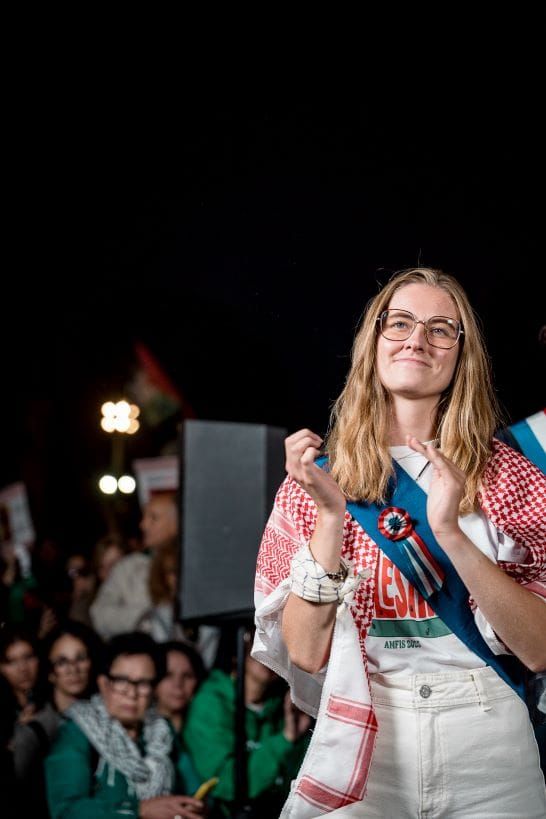
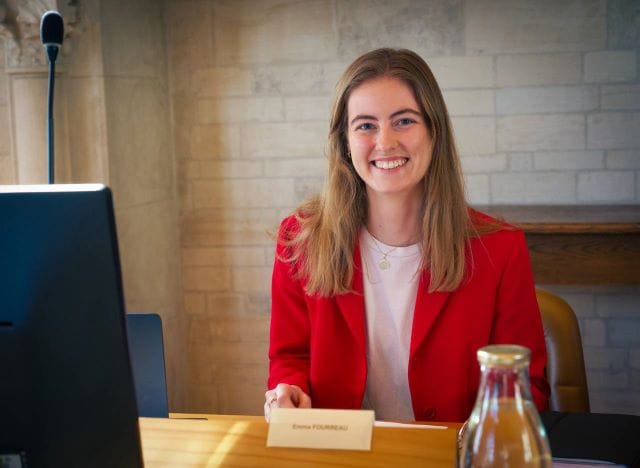
At 16, she started handing out leaflets at her local market after watching videos of the founder of a new party on Youtube. Ten years on, the party, La France Insoumise, is France's largest leftwing force, and, now 26, Emma Fourreau is leading the campaign across Calvados for its founder, Jean-Luc Mélenchon, to be voted the country's next president in the 2027 Presidential Elections.
First elected to the European Parliament only two years ago, this June she became the new co-president of the Young European Alliance, for a new youth movement for climate action and against the far-right. She sailed in the aid missions to Gaza and to Cuba, and is heading Jean-Luc Mélenchon's presidential campaign across Calvados. In March, she also became opposition Caen councillor in the spring local council elections and opened her permanent office in the town.
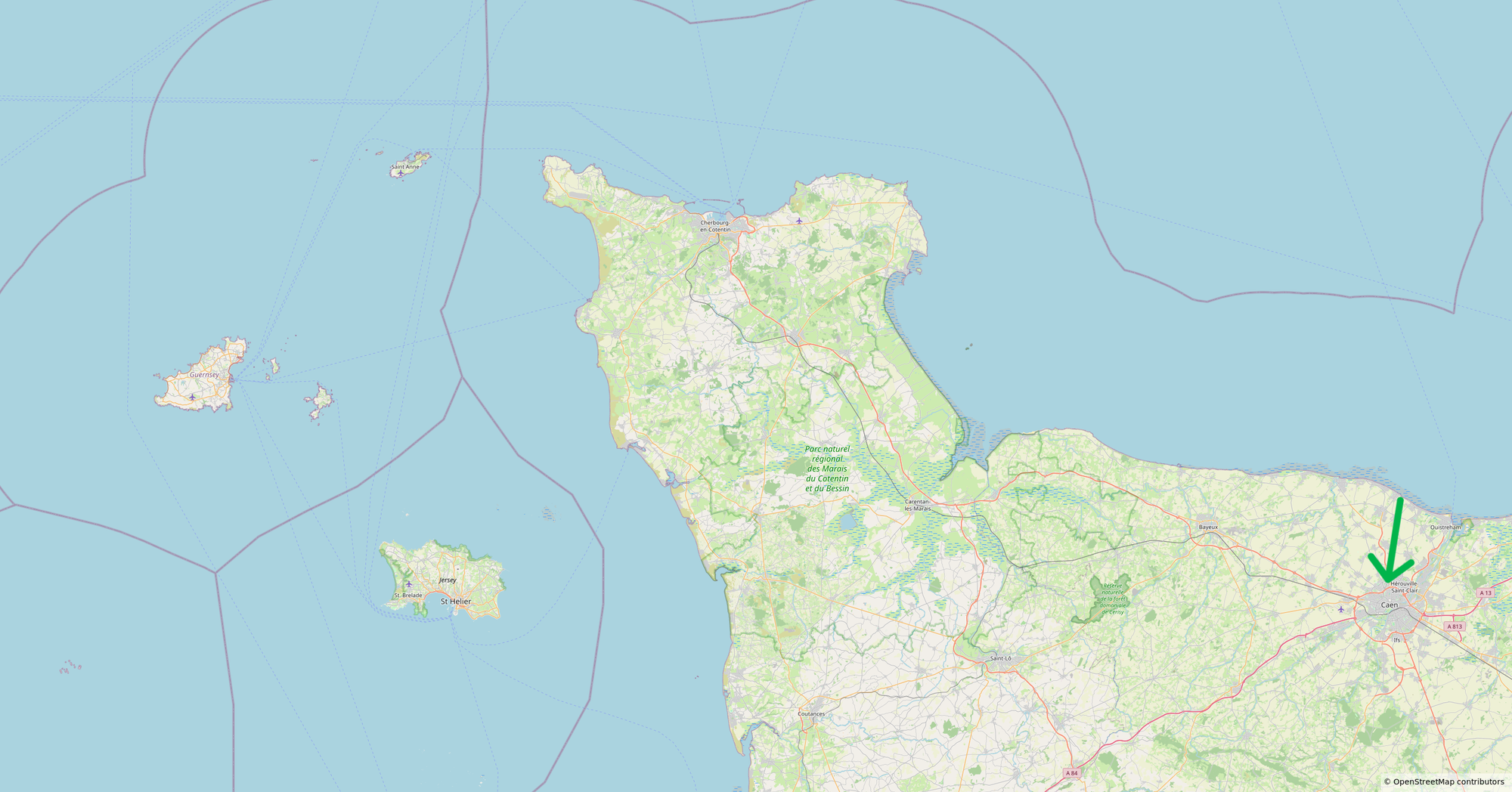
Caen, Calvados.
Considered Normandy's capital alongside Rouen, Caen serves as the diplomatic home of the Channel islands in France. The Channel Islands Office, the Bureau des Iles Anglo-Normandes, representing Guernsey and Jersey in France, has been based in the town, with its 111,000 population, since first opening in 2014. For decades, students from Jersey and Guernsey have studied through a partnership with the University of Caen Normandie. The 2026 summit uniting governments and representatives of the Normandy region and La Manche département, with those of Guernsey, Jersey, Alderney and Sark, was held in Caen in September.
What was the situation in Caen this summer? How high did temperatures reach and how did people cope?
Emma Fourreau: In some homes and schools, temperatures exceeded 40 degrees. It’s staggering. In Caen, those living in top-floor flats –where it's hottest – are typically students, often in precarious circumstances, who couldn’t sleep at night, couldn’t concentrate at work or at school because they couldn’t get any rest. They were hanging emergency blankets in front of their windows, makeshift solutions, shops sold out of fans. It was residents themselves trying to cope.
But there are measures that should have been taken years ago and haven’t, like thermic refurbishment of buildings. It’s frightening because we’re not used to that sort of heat. We tell ourselves it’s mainly in the south, and we’re protected. In reality, we’re realising that we’re not, even in Normandy, and that we’re going to have to face up to that.
It’s frightening because we’re not used to that sort of heat. We tell ourselves it’s mainly in the south, and we’re protected. In reality, we’re realising that we’re not, even in Normandy, and that we’re going to have to face up to that.
It’s a disgrace for a country as wealthy as France, that it’s residents themselves trying to cobble together solutions to cope with the heat. We’ve been raising this issue for years, buildings like sieves in winter become heat traps in summer. It’s the most vulnerable groups who suffer, always the same people – mainly young in precarious circumstances - in working-class neighbourhoods. It’s never the ultra-rich who live in badly insulated buildings.
It’s a disgrace for a country as wealthy as France, that it’s residents themselves who are trying to cobble together solutions to cope with the heat.
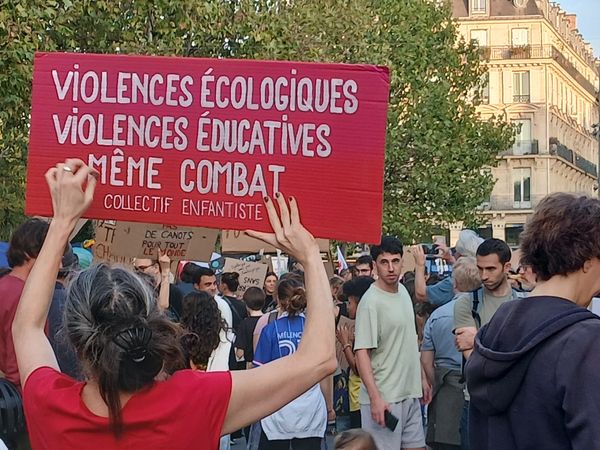
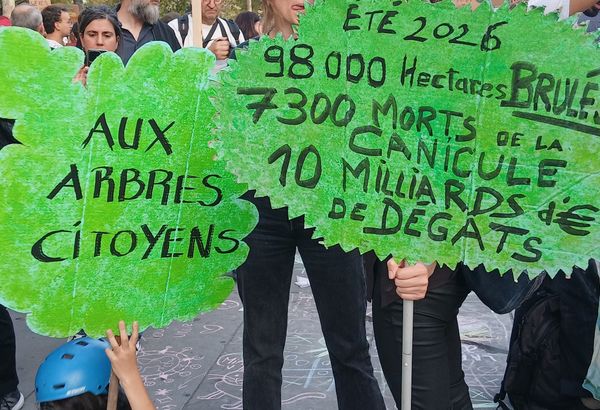
Heatwaves kill. In France, there have been over 2,000 deaths, and across Europe, in June alone, at least 12,000 deaths have been recorded – which is a staggering figure.* We can see this heat is ruining everyday life, our societies are ill-equipped to cope. I’m an opposition councillor in Caen, and the only measures taken for schools were to hand out mists and fans without batteries, even though classrooms were overheating, with children crammed in suffering – who, of course, cannot learn in such conditions. School playgrounds aren’t green spaces; they’re paved over with concrete, so our societies and our towns aren’t adapted to this. In France people were pitching tents in public parks to get some sleep because homes are unbearable.
*at publication France's excess death toll has risen to 8000 and across Europe to 35 000
We put forward proposals, notably to make swimming pools free, because they’re one of the only places where people can cool off and cost can be a barrier. Also opening museums, air-conditioned spaces; keeping parks open all night. When I called for free access to pools with Caen City Council and the wider Caen urban area, they laughed it off and rejected the proposal.
There’s also the issue of rising sea levels. Several neighbourhoods in Caen, notably the Caen peninsula - are prone to flooding, and yet the mayor is forging ahead with property developments there. So, this is not being anticipated at all by public authorities.
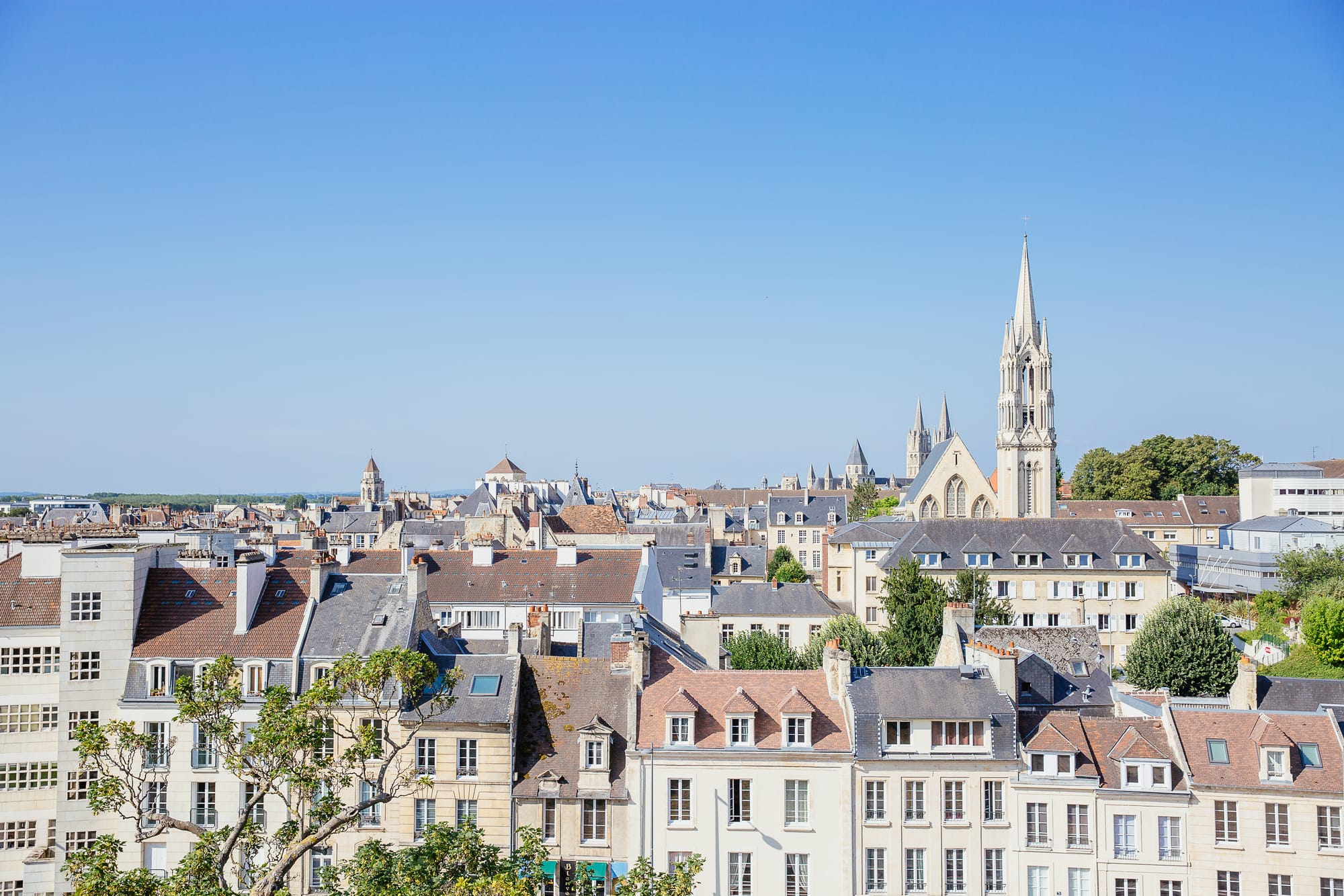
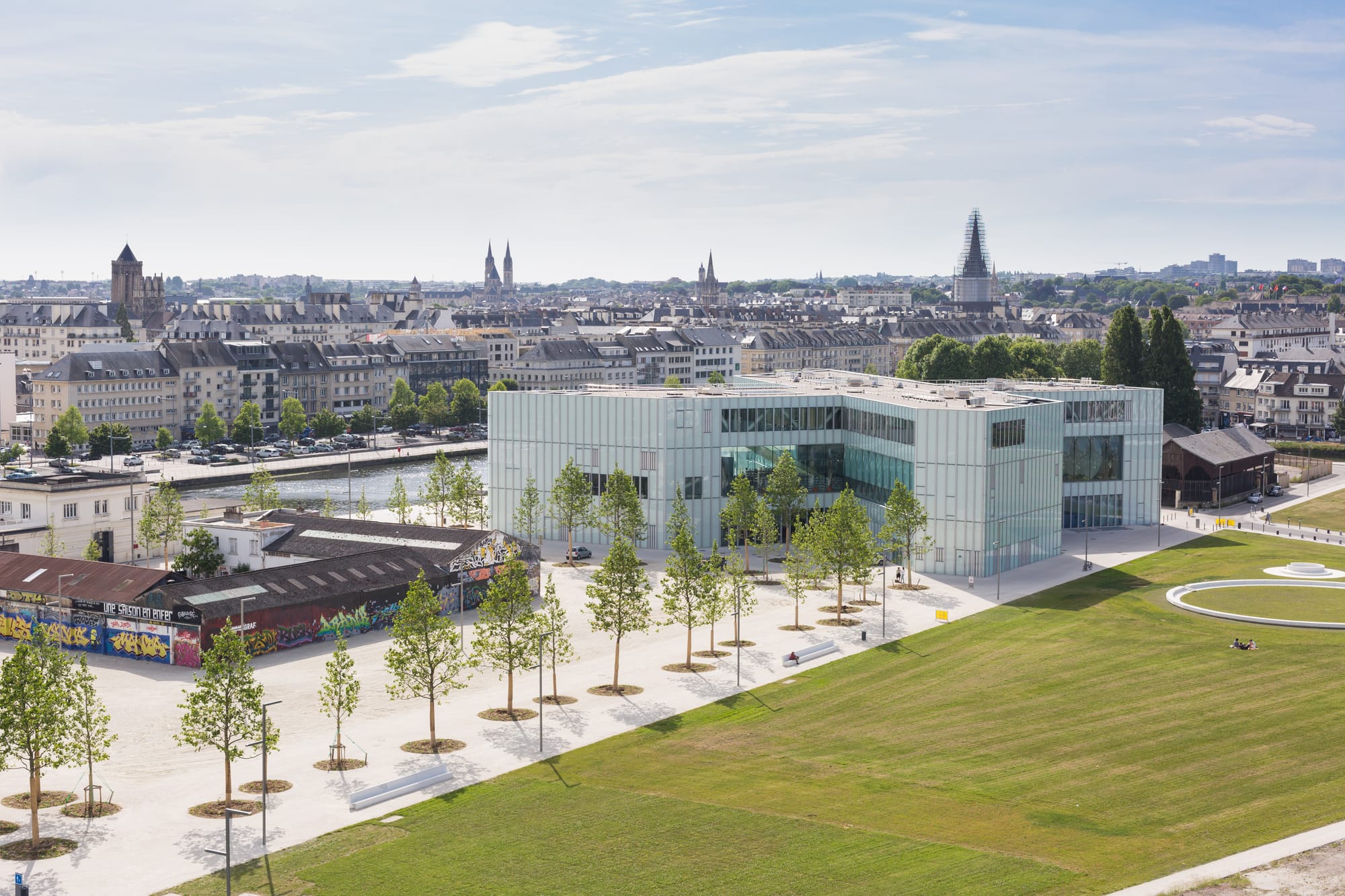
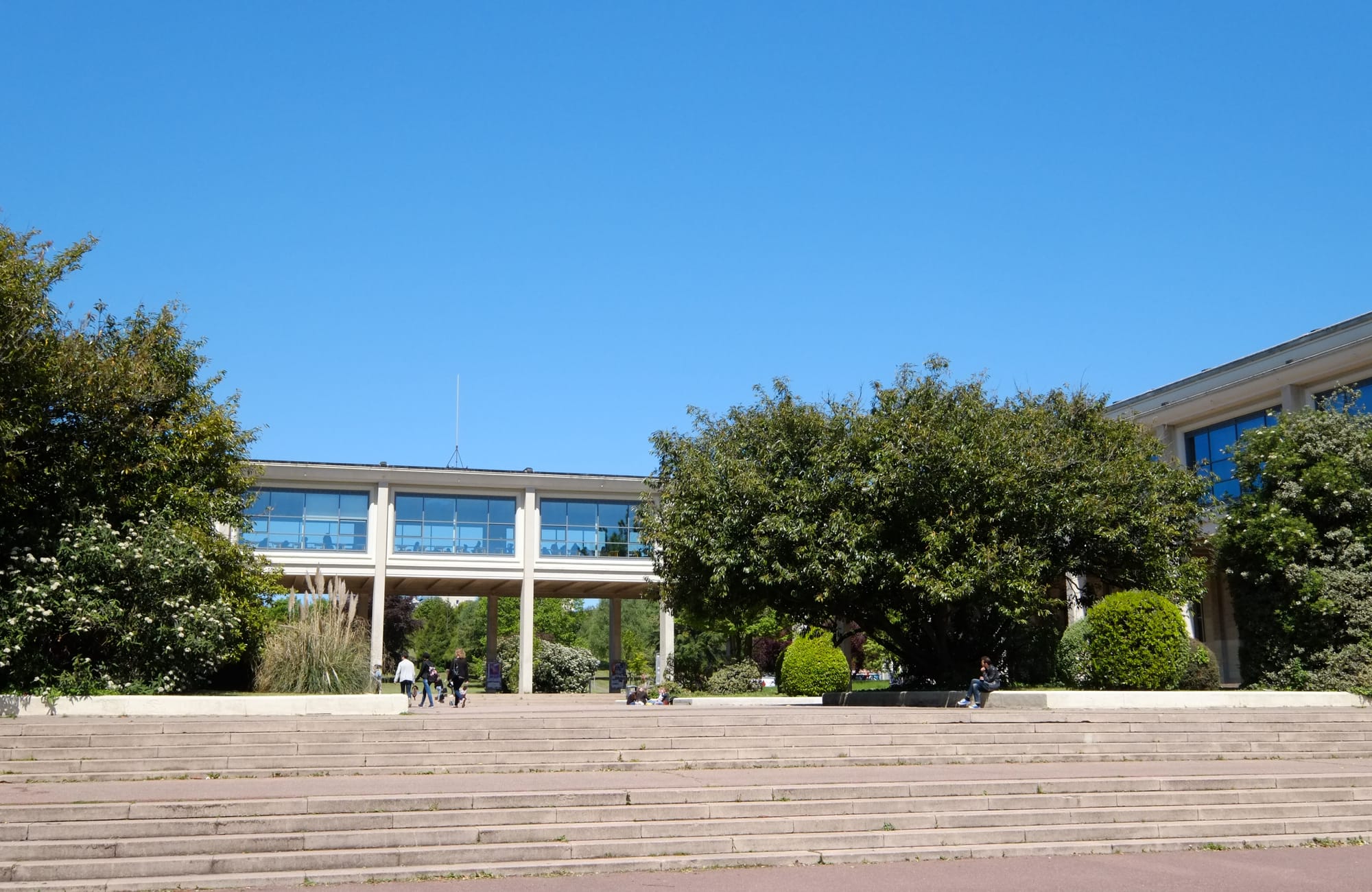
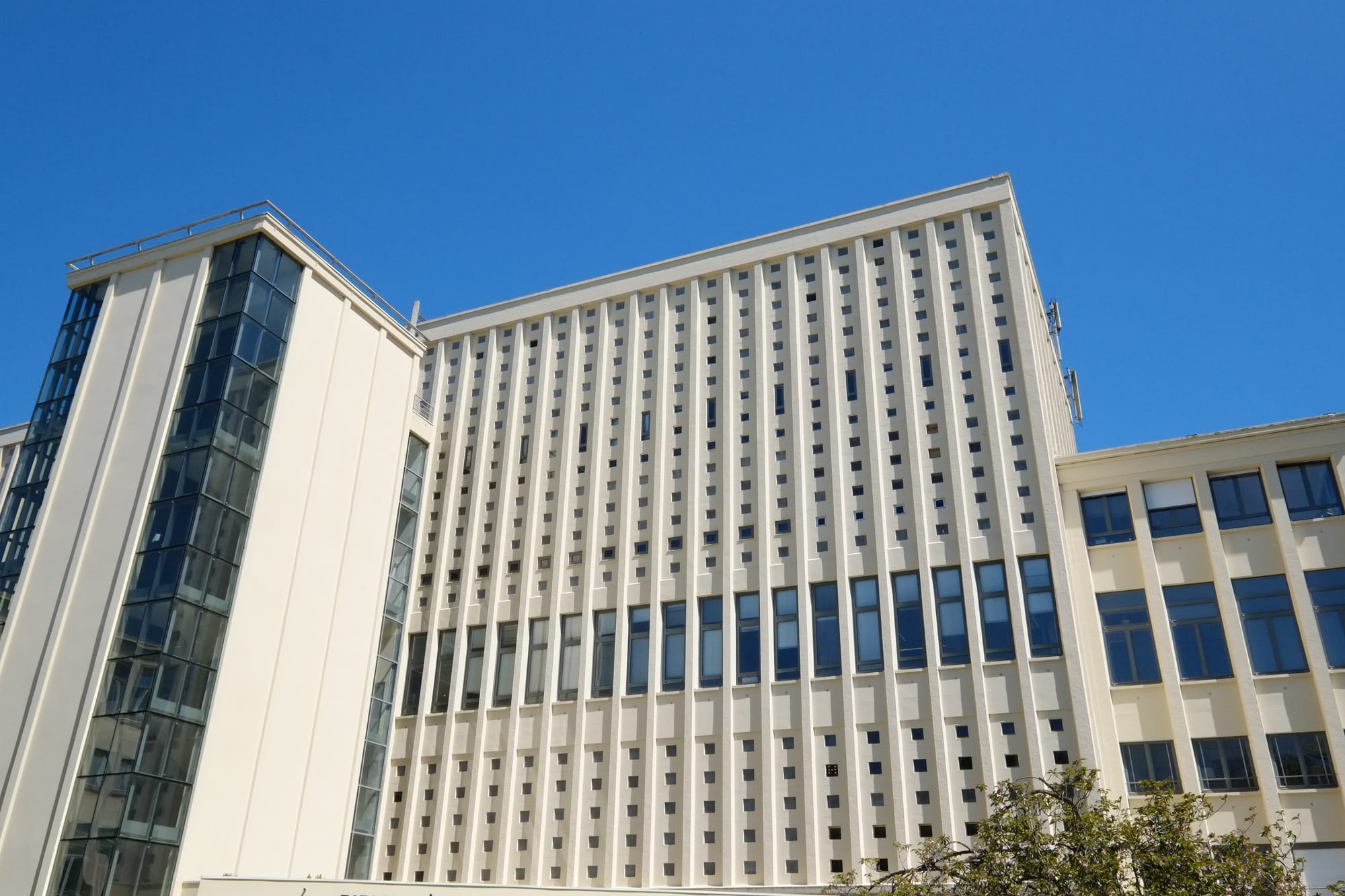
(top) Caen's rooftops, and town (bottom row) University of Caen ©Caen La Mer Tourisme
With a matter of months before France's presidential elections, what will your role in Caen involve?
EF: I’ll be campaigning non-stop because this will perhaps be the most important year of our lives; 2027 will be a crucial election both nationally and internationally, given the international fascist movement gaining momentum. We’ve seen in Latin America, with defeats for the left and victories for the far right, as in Colombia; we can see that Donald Trump is pushing this; it’s extremely important that Europe resists this fascist wave.
it’s extremely important that Europe resists this fascist wave...it is our collective destiny that is at stake
Either we’ll see the people divided, with a surge in racist, misogynistic and homophobic acts, and a real war pitting one group against another, while maintaining the same capitalist economic programme. Or, on the contrary, a programme of wealth redistribution that will allow people to live better lives. We will do everything we can to secure victory in 2027 because the stakes go far beyond our individual lives. It is our collective destiny that is at stake, and this could in turn inspire other countries and other people."
Tell us more about the Young European Left Alliance
EF: We started from the observation that an international fascist front was gaining ground, both within the European Parliament and beyond, centred around Viktor Orbán, who, thankfully, is no longer prime minister, but was coordinating the far right with [French far-right leader] Marine Le Pen, the AfD and other far-right parties across Europe.
*[this interview took place before the leftwing Die Linke victory in Berlin and before the far-right AfD advance in Germany's Saxony-Anhalt region]
There was an urgent need for an anti-fascist international counter-movement across different countries, because we face the same challenges – not only regarding the rise of the far right, but in relation to young people. Issues of unaffordable housing due to soaring prices, precarious living conditions, access to education, the fight against climate breakdown. So the response, too, has to be a European one. All our comrades, whether in Portugal, Norway, and so on are paying very close attention to the presidential election in France in 2027 – to how we’re running the campaign – because if one country in Europe swings towards the left, it could give the left in Europe, as a whole, a real boost.
All our comrades, whether in Portugal, Norway, etc., are paying very close attention to the presidential election in France in 2027 – to how we’re running the campaign – because if one country in Europe swings towards the left, it could give the radical left in Europe, as a whole, a real boost.
How much does what happens in France over the coming months matter?
EF: France, given its demographic and economic weight, and also its history, plays a fairly significant role in Europe and the world. It is therefore extremely important – at least in my view – that Jean-Luc Mélenchon should win this election to give new impetus to the left on the continent and also internationally.
If the National Rally wins, obviously this would impact women and people of colour more, but no one will come out a winner – apart from perhaps the ultra-rich – because they have no environmental programme whatsoever! They are in total climate denial. We see members of European Parliament who put forward utterly ridiculous proposals, like shutting down volcanoes to combat CO₂ emissions. The crisis is upon us, the effects are already being felt, so we don’t have a minute to lose. It’s therefore extremely important to put an environmental programme in place, and the National Rally's only plan is to install air conditioning everywhere. But air conditioning doesn’t tackle climate change – we need to tackle the root causes.
The National Rally is in total climate denial; we see members of European Parliament who put forward utterly ridiculous proposals, like shutting down volcanoes to combat CO₂ emissions!
There is also the feminist issue. Clearly, the far right is attacking women’s rights. We need to protect women and children from a patriarchal society whose impacts are fatal – as seen in recent cases, whether Patrick Bruel or with little Lyhanna. These issues are of paramount importance, and the far right will never address them.
Protecting our public services is one of LFI’s top priorities.
France is under-investing in our public services. Hospitals will come under even greater strain as climate breakdown gets worse. We saw this during the heatwaves, with hospitals overwhelmed, schools are another major issue. Protecting our public services is one of LFI’s top priorities. What we’re proposing is to create thousands upon thousands of jobs in organic, small-scale farming; to create jobs in marine renewable energy; to create jobs in the fight against climate breakdown; but also to improve our public services, because public services are the people’s wealth.
Have you ever been to the Channel Islands?
EF: Yes, I’ve been there before, and I’m also planning to visit as part of my parliamentary work, as I’m on the Fisheries Committee, so there are certainly some issues that would be worth raising. I don't have a date yet.
The first round of voting in France's presidential elections takes place on April 18 2027 with the second round on May 2 2027. Emma Fourreau is campaigning for Jean-Luc Mélenchon in Caen, Calvados, and votes in the European Parliament.
France’s 2027 presidential elections explained: Read more
On 18th April, French people will go to the polls to elect their next president of the Republic. To vote, you must be a French citizen, aged 18 or over and be registered on the electoral roll.
To stand for president, one must be of French nationality, 18 or over, having fulfilled the requirements imposed by the National Service Code with signatures of support from 500 elected representatives, in a minimum of 30 different departments or Overseas Territories.
Each individual citizen votes for one candidate. If a candidate receives more than 50% of the vote in the first round, that candidate obtains an absolute majority and is elected. If not, and, as is usually the case, a second round of voting takes place between the two top candidates.
The second round takes place two weeks after the first, so on 2nd May 2027. Between the two remaining, the candidate who obtains the most votes is then elected for five years. This term is only renewable once consecutively. Current president of France, Emmanuel Macron is ineligible since he has served two consecutive terms.
Typically after a president is elected, national elections follow to elect members of the National Assembly, whoever wins a majority of seats forms a government as in 2022. However the president has the power to dissolve parliament, as Emmanuel Macron did in 2024.
In the July 2024 snap elections, an alliance of France’s leftwing parties, called the Nouveau Front Populaire, the New Popular Front, won the most seats but the coalition was denied the right to name a prime minister and form a government in a denial of democracy. France’s current president Macron named four different prime ministers in a matter of months after a series of no confidence votes brought down consecutive governments.
This September, Macron’s approval rating has fallen to 16 % to its lowest level -down 5 points compared with July 2026 – according to an Ipsos poll. 81% of the French public view Macron’s actions unfavourably.
In the last presidential elections in 2022, after the first-round voting, the vote difference between the second-placed candidate, the extreme right leader Marine Le Pen, and the third-placed candidate, leftwing leader Jean-Luc Mélenchon, was approximately 400,000 votes.